Best Detailing Brushes for Engine Bay Cleaning
The best detailing brushes for engine bay cleaning are soft flagged nylon or natural boar-hair brushes for plastics and trim, a medium brush for oily metal, and a long-handled brush for tight reach; avoid stiff bristles on painted or delicate parts. Use the wrong brush and you can scratch covers, push grime into seams, or snag wiring and hose boots. This guide breaks down brush choice by engine-bay material, contamination level, and reach so you can buy the right tool set.
Top brush picks for engine bays
The safest starter choice is a soft detail brush with nylon or boar’s hair bristles. It is least likely to mark sensors, painted parts, trim, and logos. Add a medium-bristle utility brush for hoses and textured plastics, then a reach brush for cramped areas behind reservoirs and harnesses.
Quick picks
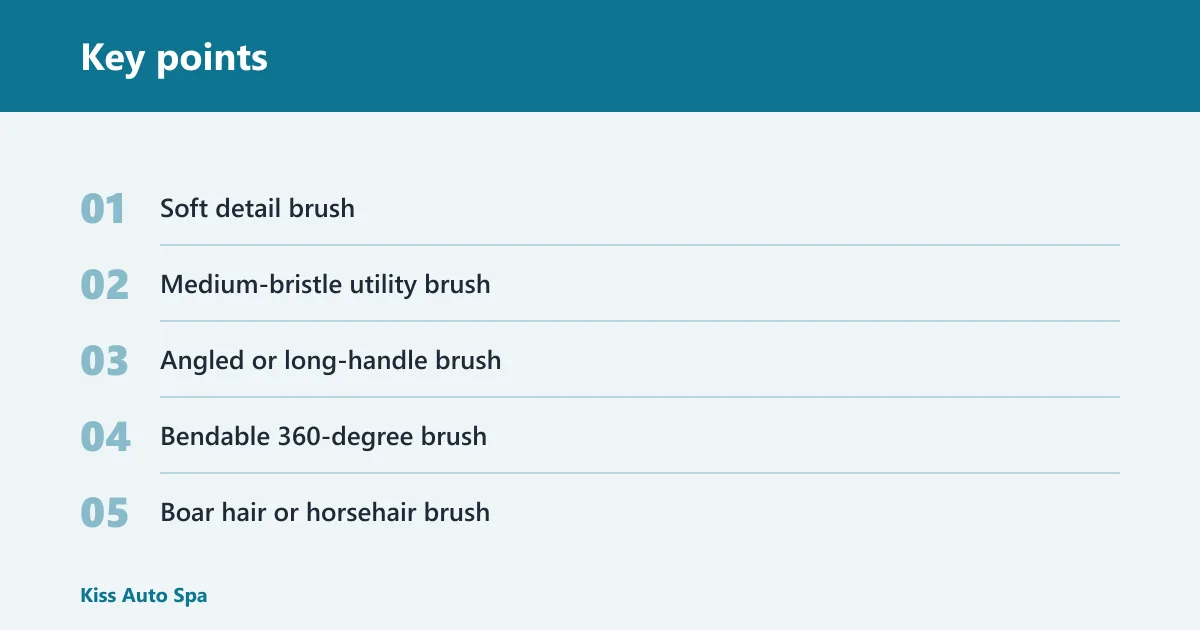
- Soft detail brush: best starter brush for sensors, trim, painted covers, and badges.
- Medium-bristle utility brush: best for hoses, textured plastics, and light oily film.
- Angled or long-handle brush: best for working behind hoses, reservoirs, and brackets.
- Bendable 360-degree brush: best for tight channels, wire clusters, and narrow gaps.
- Boar hair or horsehair brush: best for fine-detail cleaning on delicate surfaces.
- Synthetic flagged-tip brush: best when you want scratch resistance and chemical resistance together.
Soft detail brush for sensitive parts
A soft detail brush is the safest first choice for sensors, painted parts, trim, and logos. Nylon or boar’s hair bristles fit this role well, and flagged tips add extra margin on scratch-sensitive surfaces.
Choose this brush first when the bay only has dust, dry road film, or a light oily haze. It moves enough contamination without pushing you toward harsher bristles too soon.
Medium-bristle brush for textured plastics
A medium-bristle utility brush is the better choice for hoses, textured plastics, and general engine bay agitation. It gives more cleaning power than a soft brush, but it is still far safer than a stiff or wire brush on common under-hood materials.
This is the brush for grime that resists a soft pass but does not yet call for a specialty scrub tool. Keep it off delicate badges, painted covers, and exposed sensor bodies.
Reach brush for cramped spots
Angled and long-handle brushes matter when the problem is reach, not stiffness. They help you work behind hoses, reservoirs, and brackets without awkward wrist angles or knuckle contact.
A bendable 360-degree brush goes one step further. The flexible rod bends 360 degrees, and kits such as the 7PACK include a 20-inch bendable brush for tight engine-bay spaces.
Engine bay brush table
| Surface/zone | Contamination level | Safest brush type | Brushes to avoid |
|---|---|---|---|
| Plastic covers | Dust, oily film, light sludge | Soft detail brush or medium-bristle utility brush; use a soft pass first, then step up only if needed | Wire-bristle brush; stiff scrub brushes that can mark the surface |
| Hoses | Light grime, film, road dust | Medium-bristle utility brush or soft boar-hair brush for flexible material | Wire bristles and very stiff brushes that can stress rubber or leave scuffs |
| Wiring looms | Dust, light residue, salt film | Soft detail brush or synthetic flagged-tip brush; use light pressure | Wire-bristle brush and hard-edged scrub tools that can snag insulation |
| Painted covers | Dust, oily haze, fingerprints | Soft detail brush, boar hair brush, or horsehair brush | Wire brushes and coarse utility brushes that can mar the finish |
| Badges/logos | Dust trapped in edges | Soft flagged-tip brush or horsehair brush for edge work | Wire bristles and hard nylon that can chip or lift edges |
| Deep crevices | Dust, baked-on grease, packed mud | Angled or bendable 360-degree brush, paired with pre-soak | Short brushes that cannot reach, plus wire brushes on soft trim nearby |
Why this table matters: the safest brush changes with the material. Textured plastic can take more agitation than a painted cover, but neither should be treated like bare metal or a mud-caked bracket.
What brush should you start with?
Start with a soft detail brush. It is the safest first pass for sensors, painted parts, trim, and logos, and it gives you a low-risk option while you learn how much pressure a specific area will tolerate.
If the grime stays on the surface after a soft pass, move to a medium-bristle utility brush on hoses and textured plastics. Add a specialty reach brush only when the issue is access, not cleaning strength.
When a medium-bristle brush makes sense
A medium brush makes sense when the bay has oily film or light sludge on textured plastics or hoses. It gives more agitation without jumping straight to a harsh brush.
That step-up matters. Many engine bays do not need a heavy scrub, only a brush that can move residue out of the texture without chewing up the surface.
When a specialty reach brush is worth adding
Choose an angled or long-handle brush when your hand cannot line up squarely with the area. It is useful behind reservoirs, under intake runners, and around bracketed hose runs where a short brush leaves you scraping your knuckles.
Say your engine cover has a dust layer and a logo recess with dark film in the corners. A soft detail brush cleans the flat field safely, then a small flagged-tip brush can work the logo edge without switching to a stiffer tool.
Which brush fits each engine bay surface?
The same brush does not fit every under-hood material. Textured plastic, rubber hoses, painted covers, bare metal, and connectors each respond differently, so choose bristles by surface first and grime level second.
Textured plastic and rubber hoses
Use a medium-bristle utility brush for textured plastics and hoses when you need more bite than a soft detail brush can provide. For lighter contamination, a boar hair brush is often enough and keeps the touch gentler.
For hoses, avoid overloading the area with pressure. The goal is to lift film from the surface, not scrub a groove into the rubber.
Painted covers and trim
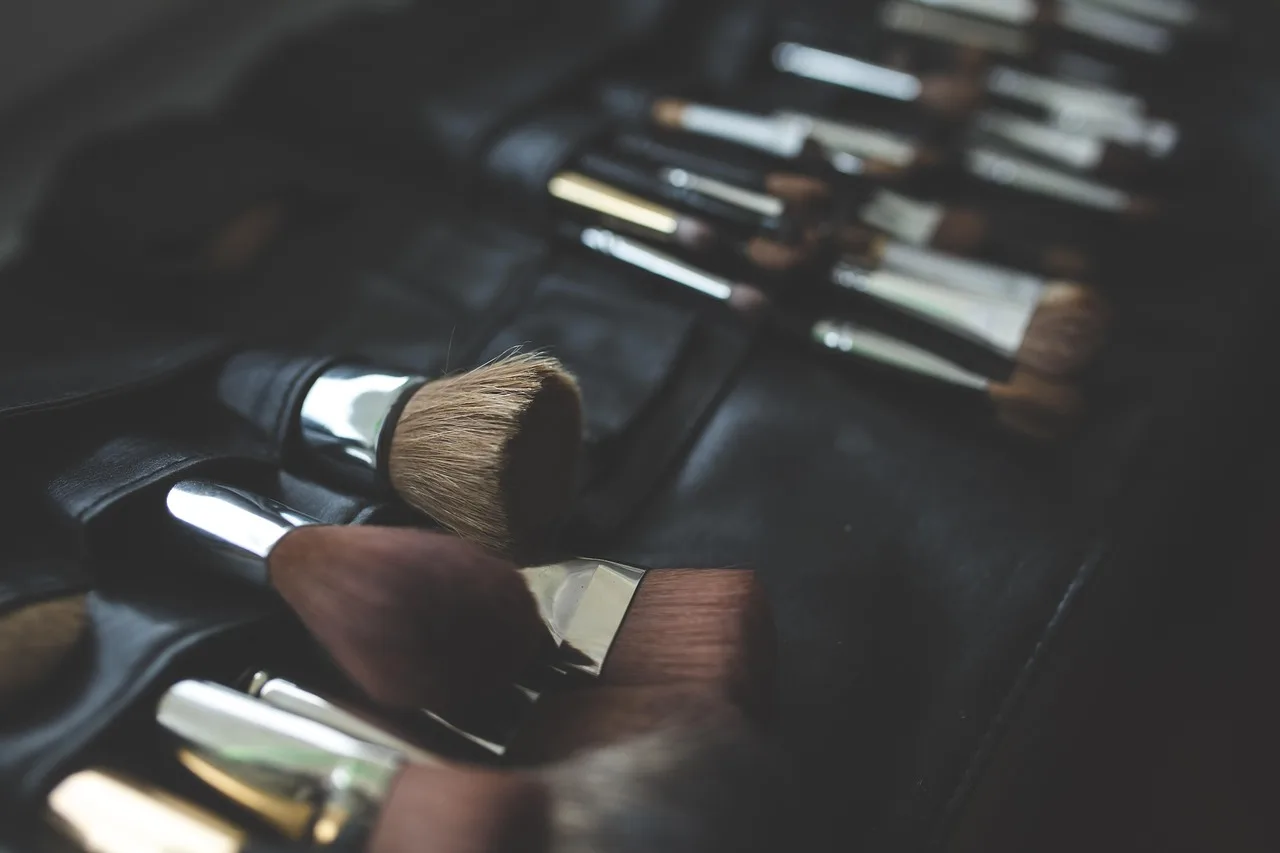
A soft detail brush is the right default for painted covers and trim, with boar hair or horsehair as good natural-bristle options. These are the areas where a gentle but effective brush matters most.
WorstBrands describes the Detail Factory brush as ultra-soft with flagged tips and designed for scratch-free cleaning. That type of build fits painted covers far better than a stiff scrub brush.
Sensors, badges, and connectors
Sensors, badges, and connectors need the softest brush in the set. A synthetic flagged-tip brush is a strong choice here because it is scratch-safe and chemically resistant, which matters during degreasing.
For delicate surfaces, Cargetup says soft boar or horsehair bristles won’t damage them. Keep that level of caution around fragile edges and electrical pieces.
How much stiffness do you need?
Match stiffness to contamination level. Dust and dry road film usually need only soft bristles, oily film calls for medium agitation, and baked-on mud or heavy grease may require a specialty reach brush plus repeated pre-soak rather than a harsher brush.
Dust and dry road film
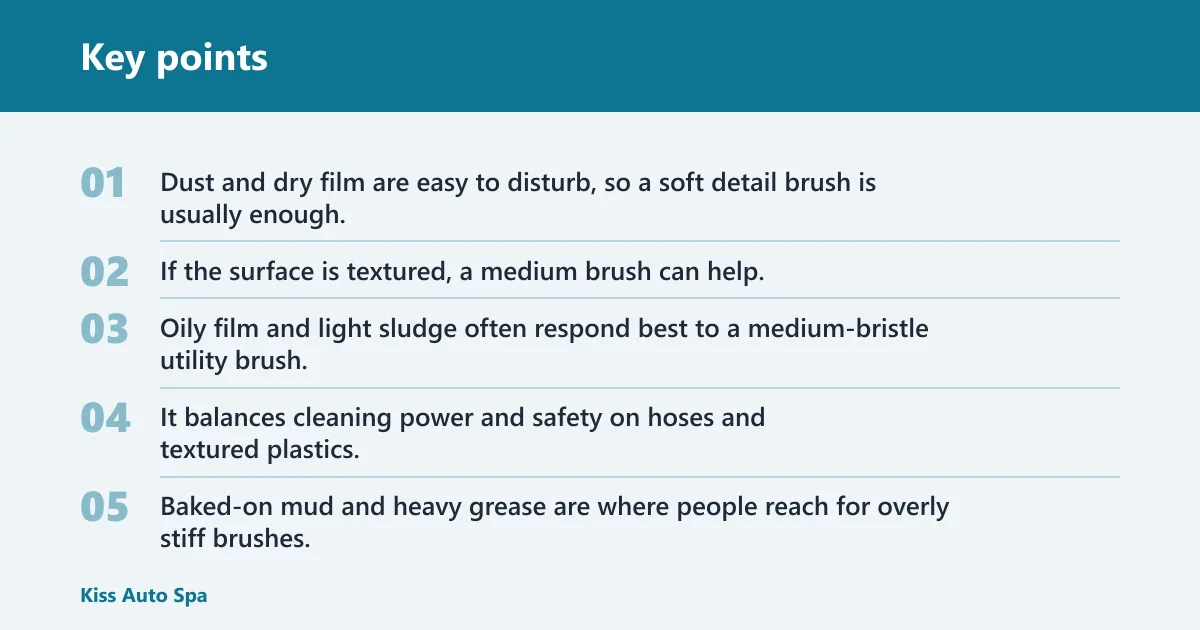
Dust and dry film are easy to disturb, so a soft detail brush is usually enough. If the surface is textured, a medium brush can help, but only after you confirm the material is not delicate or painted.
Oily film and light sludge
Oily film and light sludge often respond best to a medium-bristle utility brush. It balances cleaning power and safety on hoses and textured plastics, where a soft brush may glide over the grime instead of moving it.
Baked-on mud and heavy grease
Baked-on mud and heavy grease are where people reach for overly stiff brushes. That is where the damage risk climbs. Jimbo’s warns against stiff bristle or wire brushes because they can cause permanent damage.
For that level of contamination, start with a low-pressure rinse and pre-soak, then use a targeted medium brush or a reach brush in short passes. If the grime still holds, repeat the pre-soak instead of forcing the brush harder.
Suppose a lower engine cover has dried mud in a seam near a hose clamp. A pre-soak loosens the crust, and a bendable 360-degree brush can work the seam without forcing a stiff brush into a tight gap.
How do you clean around wires and sensors?
Use soft bristles, light pressure, and a brush that can fit the shape of the space. Around wires and sensors, the priority is to clear dirt without contacting connectors, boots, or insulation with hard edges.
Use soft bristles and light pressure
Soft detail brushes are recommended for sensors, painted parts, and trim. That same softness helps around wires because it reduces the chance of snagging or packing grit into the wrong spot.
Work in short strokes. Let the bristles do the contact, not your wrist.
Work after pre-soak and low-pressure rinse
A low-pressure rinse and pre-soak should come before brushing because loosened grime lowers the amount of agitation needed. That matters most around wiring, where less force means less risk.
When dirt is already softened, you can clear it with lighter passes and spend less time brushing near sensitive parts.
Choose bendable or angled tools for reach
Angled or long-handle brushes help reach hard-to-access engine-bay spots, and bendable 360-degree brushes are useful in tight engine bay spaces around wiring and hoses. They reduce awkward angles and the temptation to jam a short brush where it does not fit.
The worst fit is a brush that forces the hand into contact with a hot, crowded, or sharp edge. Reach tools solve that problem before it starts.
What should be in an engine bay brush kit?
An engine bay brush kit should include multiple brush sizes, but the core set can stay simple: one soft detail brush, one medium utility brush, and one reach brush. Dedicated under-hood use is better than mixing these tools with wheel or exterior brushes.
One soft detail brush
This is the brush for sensitive areas, painted parts, trim, and logos. Look for nylon or boar’s hair bristles, and avoid metal ferrules that may be less forgiving around delicate edges if the brush bumps a surface.
One medium utility brush
This is the general agitation tool for hoses and textured plastics. It should feel firm enough to move grime, but not so stiff that it starts to behave like a scrub pad.
One reach brush or bendable brush
Add one angled or long-handle brush for deep access, or a bendable 360-degree brush for narrow channels and wire clusters. The same source notes a Maxshine Universal 360° engine brush at 12 inches, which is the kind of size that helps in cramped areas.
TAKAVU’s 10-Piece Car Detailing Kit includes wire materials like stainless, brass, and nylon, but those harder materials belong in heavy-duty tasks only. Keep them away from plastics, painted covers, badges, and soft trim.
Separate towels and dedicated storage
Keep engine-bay brushes separate from wheel or exterior tools. That reduces cross-contamination, keeps brake dust away from paint-safe tools, and stops oily engine residue from migrating to other parts of the car.
Rinse brushes during use, air dry them, and store them upright. That simple care helps bristles keep their shape and keeps contamination from sitting in the base of the brush.
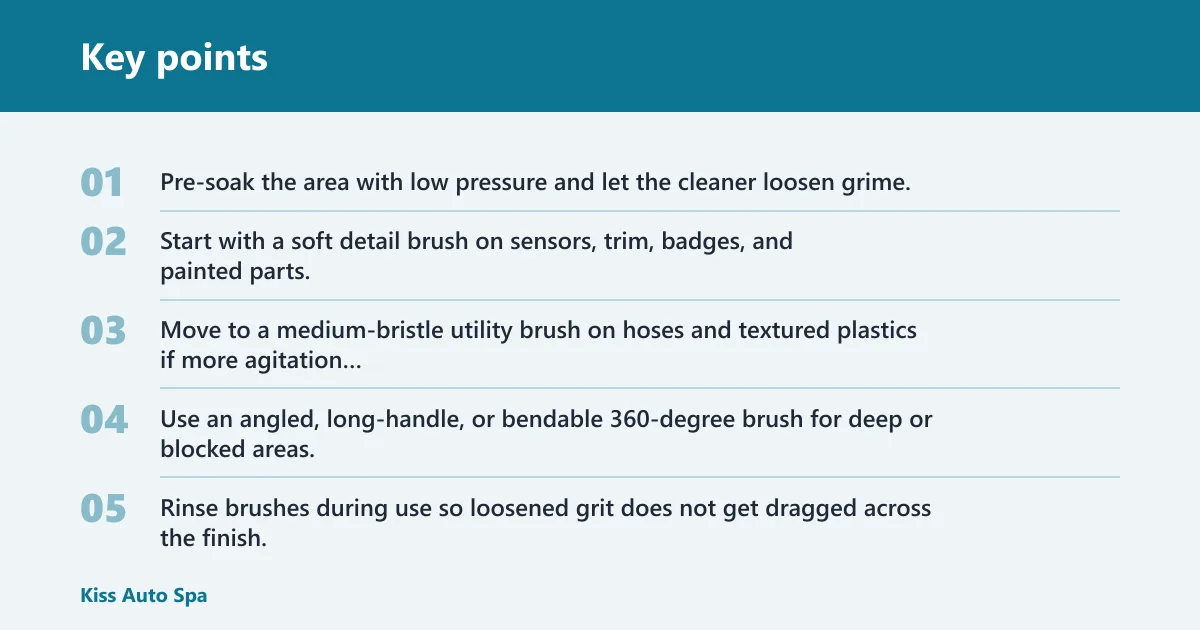
- Pre-soak the area with low pressure and let the cleaner loosen grime.
- Start with a soft detail brush on sensors, trim, badges, and painted parts.
- Move to a medium-bristle utility brush on hoses and textured plastics if more agitation is needed.
- Use an angled, long-handle, or bendable 360-degree brush for deep or blocked areas.
- Rinse brushes during use so loosened grit does not get dragged across the finish.
- Air dry them, then store them upright in a dedicated engine-bay container.
Frequently asked questions
What brushes are best for cleaning an engine bay?
The best set usually includes a soft detail brush for sensitive parts, a medium-bristle utility brush for hoses and textured plastics, and a reach brush for tight spots. That mix covers the common engine-bay materials without forcing one brush to do every job.
Can I use a boar’s hair brush on engine plastics?
Yes. A boar hair brush is a good choice for painted surfaces and plastic trim because it offers soft yet firm agitation. It is especially useful when you want more contact than a feather-soft brush but less risk than a stiff scrub brush.
Are wire brushes safe for engine bay cleaning?
No, not on plastics, painted covers, badges, or other soft surfaces. Wire brushes are for heavy-duty cleaning only, and the scratch risk is high. Jimbo’s warns that stiff bristle or wire brushes can cause permanent damage, so keep them out of most engine-bay detailing work.
What size brush do I need for tight engine crevices?
A smaller head with a long handle or a bendable shaft is the best fit for tight crevices. The point is reach, not brute force. A 20-inch bendable brush is the kind of tool that can help in narrow spaces.
Should I use soft or medium bristles under the hood?
Start soft under the hood, then move up to medium only when the surface can take it and the grime calls for it. Soft bristles are safer for sensors, painted parts, and trim. Medium bristles are better for hoses and textured plastics that need more agitation.
How do I keep from damaging delicate engine components while brushing?
Use a low-pressure rinse and pre-soak first, then brush with light pressure in small sections. Keep soft bristles near wires, sensors, and connectors, and switch to reach tools instead of forcing your hand into a tight gap. Dedicated engine-bay brushes also reduce cross-contamination.