Tire Dressing vs Tire Shine: What’s the Difference?
Use tire dressing when you want a flexible, usually water-based finish and easier cleanup; tire shine usually means a glossier, oilier finish with higher sling risk. Pick the wrong product and you can end up with wet sidewalls, dust that sticks fast, and dressing flung onto paint. This guide breaks down chemistry, finish, sling, cleanup, and which product fits daily upkeep, show cars, and low-mess application.
| Decision factor | Tire dressing | tire shine | Winner |
|---|---|---|---|
| Finish | Satin to semi-gloss, with room to move toward more gloss if layered or formulated that way | High-gloss, wet-look finish; F1 says Tire Dressing SHINE is designed for that look | tire shine |
| Sling risk | Usually lower when applied thin and allowed to dry | Usually higher when the formula is greasy, over-applied, or not dried long enough | Tire dressing |
| Cleanup effort | Usually easier because water-based dressings dry down cleaner | Often messier because oily residue can hold dust and spread onto trim | Tire dressing |
| Reapplication frequency | Often needs touch-ups sooner; Redline lists about 1–2 weeks for dressing | Can last longer in some formulas; Redline lists about 2–4 weeks for shine, while Jimbo’s Detailing notes 2–3 days for some shine products | tire shine |
| Daily-driver practicality | Better for frequent wash cycles and low-mess upkeep | Better when looks matter more than cleanup and road grime resistance | Tire dressing |
Tire dressing vs tire shine: the core trade-off
Answering the title question starts with chemistry, then finish. Tire dressing is the broader product family; tire shine usually points to the gloss-first end of that family, where the formula is built for a wetter look and a stronger visual pop.
That distinction matters because the same tire sidewall can look very different depending on residue, texture, and how much product sits on the surface. A clean, even layer on a blackwall tire is one result; a slick film on a dusty sidewall is another.
What readers usually mean by each term
In common use, the terms often get mixed together. Swanky Tires notes that tire shine and tire dressing are often used interchangeably, but the finish target still differs: dressings usually read as satin or semi-gloss, while shine products usually aim for a deeper wet look.
That is why a product can be called a tire dressing and still look glossy, especially if it is layered carefully. It is also why a shine product can behave like a dressing in some formulas, even if the label sounds simpler than the chemistry underneath.
Tire dressing decision table
This table maps the product to the use case, not to a slogan. If you want lower sling and cleaner dry-down, tire dressing is usually the safer default; if you want the strongest wet look and can accept more cleanup, tire shine is the stronger visual choice.
| Use case | Tire dressing | tire shine | Best pick |
|---|---|---|---|
| Daily driver | Satin to semi-gloss, lower sling, easier wash-day upkeep | More gloss, more chance of dust and road film | Tire dressing |
| Show car | Clean, controlled gloss if applied in thin layers | Stronger wet look and more visual pop | tire shine |
| Rainy climate | Better for low-mess use when water and road spray are common | Can look great, but oily residue tends to collect grime faster | Tire dressing |
| Blackwall OEM look | Closer to a fresh, factory-style finish | Can read too glossy unless used very lightly | Tire dressing |
| Textured sidewalls | Spreads more evenly on texture and raised pattern | Can pool in texture and look uneven if over-applied | Tire dressing |
| Quick detail | Fast, controllable, and less cleanup after dry-down | Fast visual pop, but more risk of sling if rushed | Tire dressing |
Daily driver
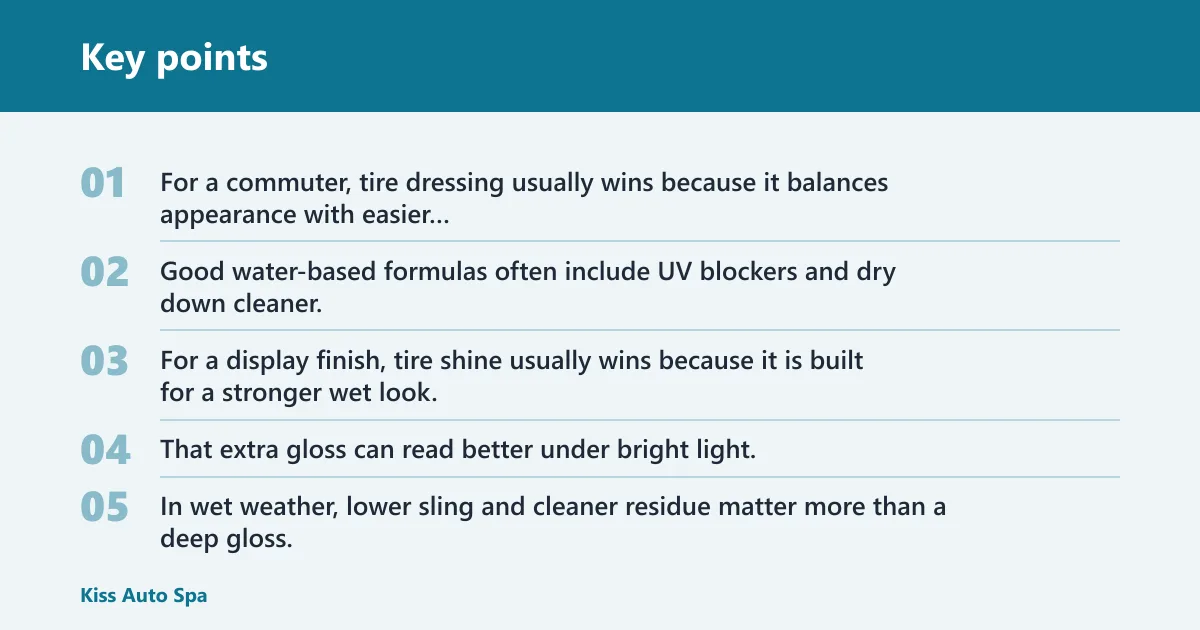
For a commuter, tire dressing usually wins because it balances appearance with easier cleanup. Good water-based formulas often include UV blockers and dry down cleaner, which matters when the tires are exposed to frequent wash cycles, street dust, and stop-and-go use.
Show car
For a display finish, tire shine usually wins because it is built for a stronger wet look. That extra gloss can read better under bright light, but it also makes application discipline more important because excess product is easy to see.
Rainy climate
In wet weather, lower sling and cleaner residue matter more than a deep gloss. A water-based dressing tends to fit that job better because it usually leaves less oily film for road grit to stick to after rain and spray.
Blackwall OEM look
If you want a stock, freshly cleaned look, tire dressing usually gets closer. The finish sits lower on the gloss scale, so the tire reads dressed rather than slick, which suits factory blackwall tires better than a wet reflective sheen.
Textured sidewalls
Texture changes how finish appears. Raised patterns, molded lines, and lettering catch product unevenly, so a thin dressing with an applicator pad or foam applicator tends to spread more uniformly than a heavy shine formula.
Quick detail
If speed matters, tire dressing is usually the safer quick-detail pick because it is easier to control. A shine product can look better immediately, but the cleanup penalty rises fast if you rush the application or leave excess on the sidewall.
What makes water-based dressing different?
Water-based tire dressing usually uses a silicone emulsion, and Redline describes tire dressing that way, with silicone and UV protectants. That setup is built to condition rubber and leave a satin to semi-gloss finish without the greasy feel that often comes from heavier solvent content.
Because the carrier is water-based, these formulas often dry down cleaner. Many also include UV protection additives, which can help resist sun damage, but they are not a cure for cracking or fading that already exists.
Silicone emulsion and gloss
Silicone emulsion is what helps many dressings spread evenly and add gloss without immediately turning oily. It also helps the tire sidewall look more uniform on black rubber, especially after a proper wash.
Lower sling and cleaner dry-down
Lower sling is one of the main reasons people choose water-based dressing. When the product is applied thinly and allowed to set, there is less loose residue to fling onto paint or rocker panels during the first drive.
Where UV additives fit
UV blockers belong in the protection conversation, not the shine conversation. They can be useful on tires parked in strong sun, but they are only one part of tire care; washing away old residue and dirt still matters more than a louder gloss claim.
What makes solvent-based tire shine different?
Solvent-based tire shine is usually the gloss-first option. Redline says tire shine uses dimethyl silicone in petroleum distillates, and Jimbo’s Detailing describes it as usually solvent-based and ultra-glossy. That combination is what creates the strong wet look many people want.
The trade-off is residue. Petroleum distillates can leave a more oily film, and that film can attract dust, especially on tires that see a lot of road grime or get hit by rain soon after application.
Petroleum distillates and wet gloss
Petroleum distillates are common carriers in solvent-based shine products because they help deliver strong gloss quickly. The finish can look very wet, but the look often comes with a thicker surface feel than a cleaner water-based dressing.
Why sling and dust stick more often
Sling usually happens when product is over-applied, when there is not enough dry time, or when the formula stays too greasy. A high-gloss shine product is more likely to show that problem because there is more mobile residue to fling off the tire sidewall.
When a high-gloss look makes sense
Choose a shine product when the look matters more than the cleanup. That includes photo sessions, show-day prep, or any situation where the tire is a visible styling element rather than a low-maintenance part of the car.
Can tire dressing still look glossy?
Yes. Tire dressing can look glossy too, especially when the formula is built for more gloss or when you layer it carefully. The difference is control: you can move a dressing from satin toward semi-gloss without jumping straight to the oily look that many shine products produce.
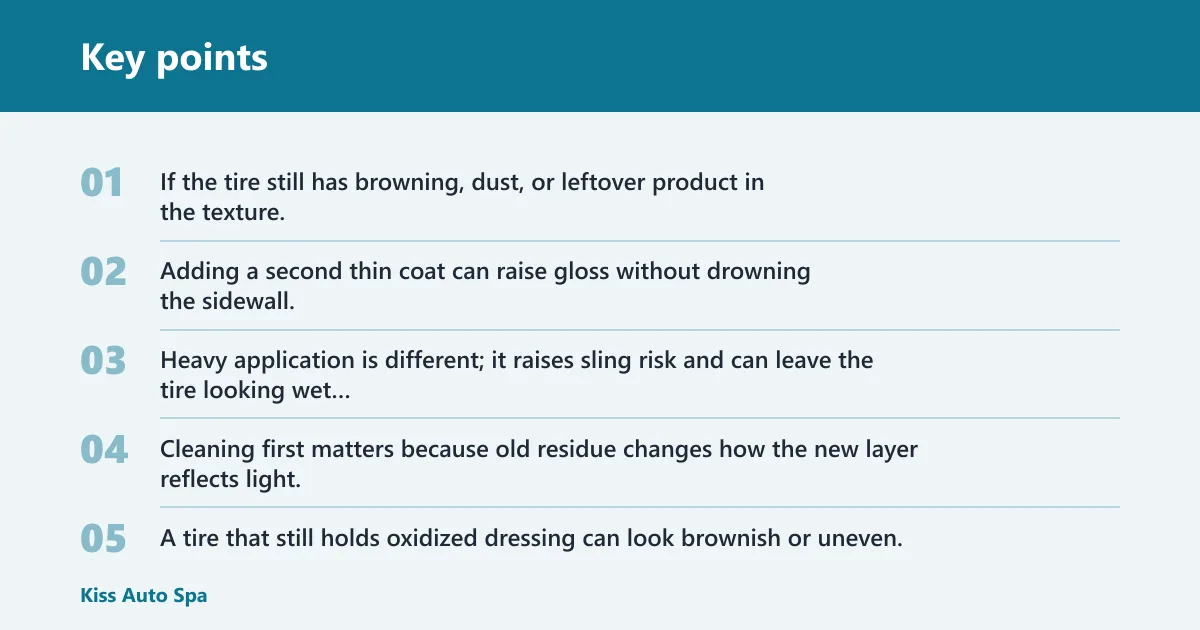
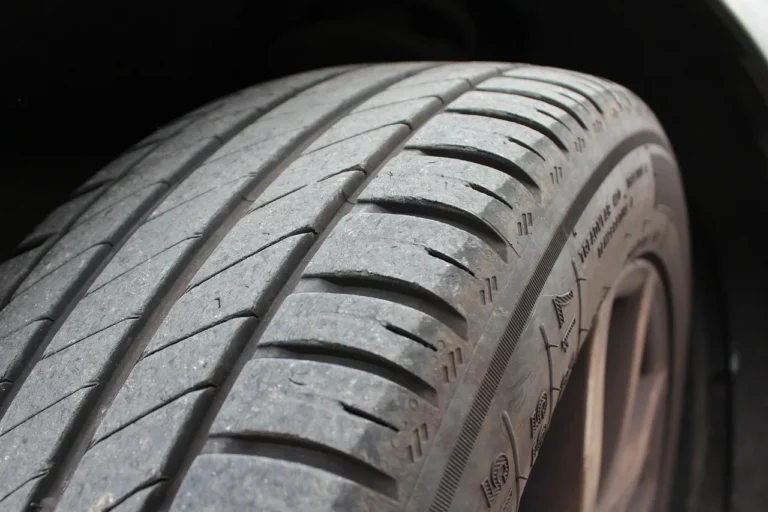
Old residue changes that result. If the tire still has browning, dust, or leftover product in the texture, the new dressing can look patchy or falsely shiny, which makes the sidewall seem glossier in some spots and duller in others.
Layering versus over-application
Adding a second thin coat can raise gloss without drowning the sidewall. Heavy application is different; it raises sling risk and can leave the tire looking wet in a way that collects dirt faster than it improves appearance.
How prep changes the final look
Cleaning first matters because old residue changes how the new layer reflects light. A tire that still holds oxidized dressing can look brownish or uneven, and that can make a lower-gloss product appear brighter than it really is.
Suppose a 225/45R17 daily-driver tire has old residue trapped in the sidewall grooves. Apply a new dressing without scrubbing first, and the tire can read patchy in direct sun; clean it first, and the same product usually looks more even and less shiny in the wrong places.
Which lasts longer and cleans up easier?
Durability depends on formula, weather, and how much road spray the tire sees. The same source lists tire dressing at about 1–2 weeks and tire shine at about 2–4 weeks, while Jimbo’s Detailing gives a shorter 1–2 week range for dressing and 2–3 days for shine. The spread shows why product label and use pattern both matter.
Cleanup is usually easier with dressing because it dries down cleaner. If the car sees wet roads often, a gloss-heavy shine can hold onto dust and grime sooner, which means more frequent wipe-downs and more chances for sling.
Durability by formula type
Water-based dressing often needs more frequent reapplication, but it is easier to live with between washes. Solvent-based shine can last longer on paper in some formulas, yet the oily finish may require more cleanup to keep the sidewalls looking fresh.
Reapplication by use case
If the car is a daily driver, a shorter reapplication cycle is not always a problem if the product stays clean. If the car sits for display or weekend use, a longer-lasting gloss may be more useful even if the application is messier.
Cleanup after wet road use
Rain, slush, and road film change the equation. A tire that gets hit by spray soon after application is more likely to show streaking or dust stickiness if the formula is oily, while a cleaner-drying dressing usually stays more presentable.
A common first-timer mistake is chasing more shine by adding a thick second coat right before a drive. On a front tire that will hit the road in about ten minutes, that extra product usually creates more sling than gloss, and the rocker panel can take the mess.
Choose Tire dressing if… / Choose tire shine if…
Choose Tire dressing if you want lower sling, cleaner dry-down, a factory-style look, or a product that fits regular wash cycles. It is also the better call for textured sidewalls, rainy climates, and drivers who want less residue on trim and paint.
Choose tire shine if you want the strongest wet look, a more obvious visual pop, or a finish that reads glossy from a few steps back. Accept more cleanup, use a thin coat, and give it enough dry time before driving.
For either one, an applicator pad or foam applicator can help you spread product evenly on the curved sidewall. That matters on raised lettering and molded texture, where overspray and pooling can ruin an otherwise clean finish.
- Decide whether you want satin-to-semi-gloss or a wet look.
- If you drive daily or in rain, pick Tire dressing.
- If you want a showier finish and can manage cleanup, pick tire shine.
- Check the sidewall texture; more texture favors thin, controlled application.
- Use a foam applicator and stop before the sidewall looks wet enough to run.
Frequently asked questions
What is the difference between tire dressing and tire shine?
The main difference is chemistry and finish target. Tire dressing is the broader category and often points to water-based, satin-to-semi-gloss formulas. Tire shine usually means a gloss-first product, often solvent-based, with a wetter look and a higher chance of sling if it is over-applied or not allowed to dry.
Is tire shine just a type of tire dressing?
In common use, yes, often it is. The same source notes that the terms are sometimes used interchangeably, but the practical distinction still holds: dressing is the umbrella term, while shine usually signals a product aimed at stronger gloss and a more dramatic finish.
Which lasts longer: tire dressing or tire shine?
It depends on the formula and the source, but many lists put shine slightly ahead. The same source lists dressing at about 1–2 weeks and shine at about 2–4 weeks; Jimbo’s Detailing gives 1–2 weeks for dressing and 2–3 days for some shine products. Real-world durability changes with weather and wash frequency.
Which is better for daily drivers: tire dressing or tire shine?
Tire dressing is usually the better fit for daily drivers. It tends to dry cleaner, sling less, and keep a more factory-like look between washes. That matters when the car sees rain, dust, and frequent highway use, where an oily finish can become a cleanup job.
Does tire shine sling onto paint more than tire dressing?
Usually yes, especially when the shine formula is greasy or applied too heavily. Sling is more common when there is excess product, too little dry time, or a formula that stays mobile on the sidewall. A thin, even coat and a proper applicator reduce that risk on both product types.
Can tire dressing give a glossy finish too?
Yes. A dressing can look glossy if the formula is built that way, if it is layered carefully, or if the tire is already clean and free of old residue. The key is control: more gloss should come from product choice and prep, not from flooding the sidewall with extra liquid.
Does tire shine damage rubber over time?
Not every shine product damages rubber, but solvent-heavy formulas can be harsher over time, especially if they are used repeatedly and left as a thick film. That is why the formulation matters. A product with petroleum distillates may be more aggressive than a water-based dressing with UV protection additives.