Waterless Wash for Cars: How to Use It Safely
Use a waterless wash only when the paint has a light dust film, no visible grit, and a small test wipe feels smooth. If the panel feels sandy, stop and switch to a rinse or prewash. Using it on contaminated paint can drag grit across the clear coat and leave fine scratches. This guide gives you the go, caution, and stop rule, the safe application steps, and the point where you should change methods.
What a waterless wash
A waterless wash is a spray-and-wipe method for light contamination. It depends on a cleaner with lubricating polymers or lubricants so the towel can lift dust, pollen, fingerprints, and light road film with less drag.
It is best for quick touch-ups and maintenance cleaning on lightly soiled paint. It is not a mud remover, and it is not a substitute for a full wash when the car has heavy grime.
When waterless wash is the right choice
Use it when the surface looks dusty or has a thin film, the panel feels smooth to a light touch, and the contamination is limited to paint-safe debris. It fits parking-lot cleanups, garage dust, and light road film after a short drive.
When to choose rinseless or traditional washing instead
Move to a rinseless wash when the car is dirtier than a quick touch-up but still does not carry heavy mud or crusted debris. Choose a traditional hose-and-bucket wash when the lower body, wheels, or wheel wells carry grit, salt buildup, caked grime, or brake dust that needs a full rinse.
What you’ll need
- Waterless car wash spray with lubricants or lubricating polymers.
- High-pile or plush microfiber towels.
- A second clean microfiber towel for buffing.
- A shaded work area.
- Cool-to-the-touch panels.
- Separate towel faces for dirty zones.
- A rinse bucket or hose if the inspection fails and you switch methods.
Go, caution, stop by vehicle zone
This checklist turns the vague “light dirt only” advice into a practical cutoff. Inspect each area before you spray. If you feel grit, see mud, or notice crusty buildup, do not use waterless wash there.
| Vehicle zone | Go | Caution | Stop | Required towel count | Fallback method |
|---|---|---|---|---|---|
| Roof / hood | Light dust, pollen, fingerprints, thin road film | Needs extra towel faces if the panel loads up fast | Grit, sand, ash, or visible drag on the test wipe | 2 towels minimum | Rinseless wash for dirtier maintenance cleaning |
| Upper sides | Dust film and light fingerprints | Sticky road film near mirrors or handles | Any sandy feel or heavy contamination | 2 towels minimum | Rinseless wash |
| Lower doors / rockers | Only very light film after a short drive | Watch closely for splash marks and embedded grit | Road salt, mud, caked grime, or roughness to the touch | 3 towels minimum, often separate faces only | Traditional wash |
| Bumpers | Light film on front or rear bumper covers | Bug residue or heavier road film may need more than one pass | Thick bugs, tar, dried grime, or grit | 3 towels minimum | Rinseless or traditional wash |
| Wheels | Only very light dust on painted wheel faces | Use a separate cleaner and separate towels | Brake dust, heavy dirt, caked grime, or rough buildup | Dedicated towels only | Wheel cleaner plus traditional wash |
How do you wash a car with waterless method?
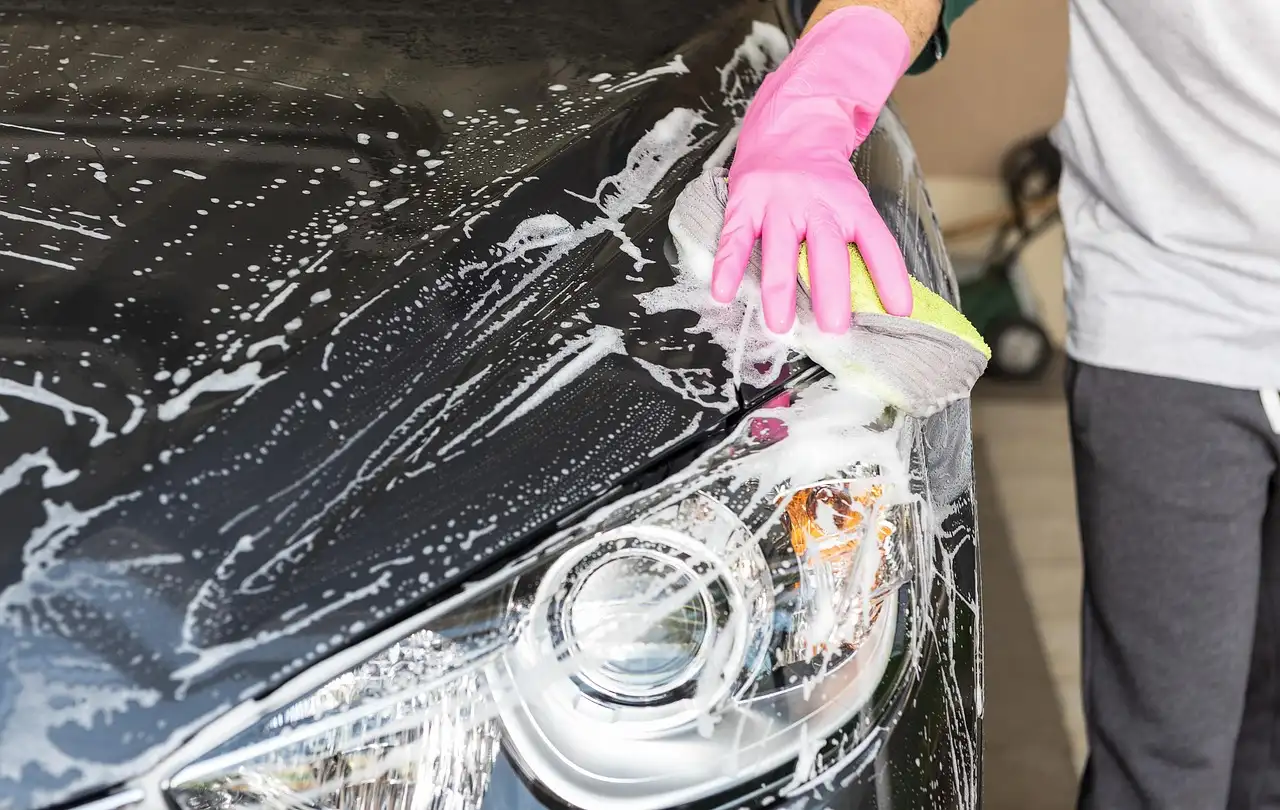
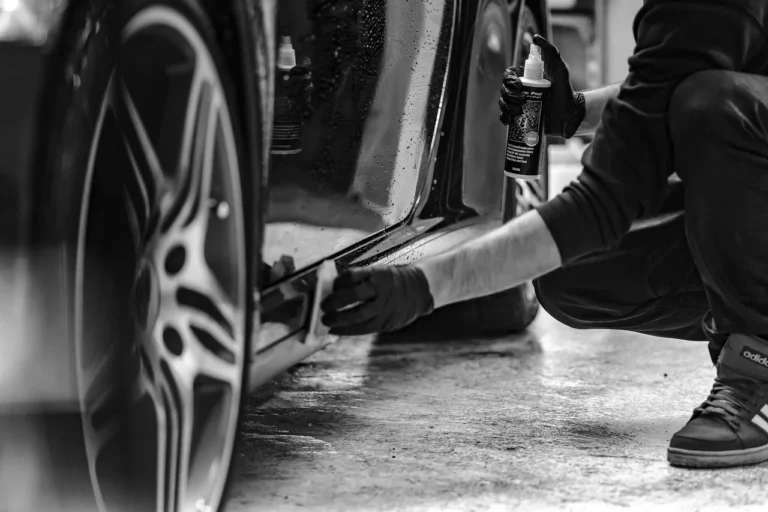
Inspect the car first, then work one cool panel at a time in shade. Spray a small section, wipe straight lines with a folded microfiber towel, flip to a clean face before the towel loads up, and finish with a second clean towel. That sequence keeps contamination off the paint.
- Inspect the surface and stop at grit, mud, salt buildup, or ash.
- Park in shade and confirm the panel feels cool to the touch.
- Work from the top down, starting with the roof or hood.
- Spray a small section until it is evenly lubricated; a 2×2 foot area is a practical size.
- Wipe in straight lines with light pressure, then turn the towel to a clean face.
- Buff with a second clean towel for the final dry finish.
Say your hood has a thin layer of morning dust after an overnight garage stay. That is a go case if the towel glides smoothly on a test spot. If the same hood has embedded road grit near the nose, stop and move to a rinseless or traditional wash instead.
Suppose the upper doors look dull but feel smooth. You can stay with waterless wash, but only if you keep the wipe area small and change towel faces before they start to drag.
How many microfiber towels do you need for a waterless wash?
Multiple towels matter because the first towel picks up contamination. A single towel for the whole car increases cross-contamination risk, especially when you move from cleaner upper panels to dirtier lower panels. A full-car wash often calls for 6–8 plush microfiber towels, while smaller maintenance jobs can use fewer if the panels stay clean.
How to fold towels into usable faces
Fold each towel into quarters, or into eight usable faces if the towel size allows it. The point is simple: expose a fresh face often, and do not keep wiping with a loaded side. That matches the need to change towel faces immediately when dirt builds up.
When to retire a towel face and switch towels
Retire a face as soon as it looks soiled, feels tacky, or starts to drag. If the face no longer glides smoothly, do not save it for the next panel. Flip to a clean face at once; if all faces are loaded, switch to a fresh towel.
How do you avoid scratches and streaks with waterless wash?
Keep pressure light and motion straight. Do not scrub in circles, and do not reuse a dirty towel face on a cleaner panel. The safest finish comes from low pressure, fresh lubrication, and a second towel for the final buff.
Keep pressure light and motion straight
Minimal pressure reduces the chance of grinding grit across the clear coat. Straight-line wiping gives you better control and avoids the circular motion that can leave visible marks.
Use the second towel for the final pass
The second towel removes leftover residue after the main wipe. That final buff helps reduce streaks, especially on dark paint or on panels that dry quickly. Keep the buff towel clean; do not use the same towel that did the first, dirtier pass.
Stop immediately if the surface feels gritty
A gritty feel is the stop sign. If the paint does not feel smooth after the spray goes on, do not keep pushing through it. That is the moment to change methods before you scratch the finish.
Common mistakes
Most mistakes come from trying to stretch waterless wash beyond its job. The fix is usually to slow down, inspect first, and change methods sooner.
- Using it on dirty lower panels: Rockers and lower doors pick up the worst road film, so use stricter limits there.
- Wiping wheels with the body towel: Wheels need dedicated towels and often a dedicated cleaner because brake dust is abrasive.
- Working in direct sun: Hot paint dries product too fast and raises streaking risk.
- Trying to force through grime: More pressure does not make mud or caked dirt safe to wipe.
- Skipping towel rotation: A loaded towel face can transfer grit back onto cleaner paint.
Picture a sedan with clean roof panels but gritty lower doors after a wet commute. The roof may still be a go, while the lower body is a stop. Treat those zones separately instead of giving the whole car the same answer.
Waterless wash vs. rinseless vs. traditional wash
Waterless wash is the lightest method: spray and wipe for light contamination only. Rinseless wash is the middle option, using low water with a bucket method for dirtier maintenance cleaning. Traditional washing is the safest choice for heavy grime, sand, salt buildup, and caked debris.
| Method | Best for | What it does not fit | Typical use case |
|---|---|---|---|
| Waterless wash | Dust, pollen, fingerprints, light road film | Heavy mud, sand, caked grime, salt crust, brake dust | Quick maintenance clean on a lightly dirty car |
| Rinseless wash | Dirtier maintenance cleaning with low water | Very heavy buildup or thick abrasive debris | When the car is dirtier than waterless can handle |
| Traditional wash | Heavy grime and abrasive debris | None of the common heavy-road contamination cases | Best choice when contamination is beyond light film |
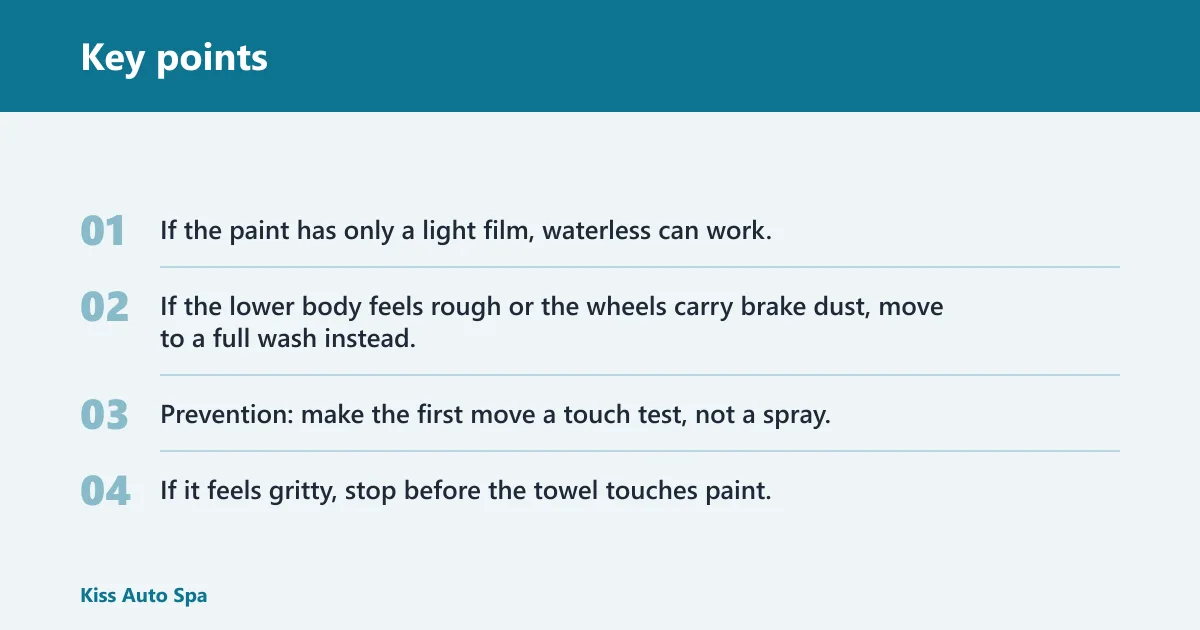
If the paint has only a light film, waterless can work. If the lower body feels rough or the wheels carry brake dust, move to a full wash instead.
Prevention: make the first move a touch test, not a spray. If the panel feels smooth, continue. If it feels gritty, stop before the towel touches paint.
Frequently asked questions
Are waterless car washes safe for paint?
Yes, when the paint has only light contamination and you use clean microfiber towels with plenty of lubrication. They are not safe for gritty panels, because abrasive debris can be dragged across the clear coat. The safe zone is smooth, lightly dusty paint in shade on a cool surface.
Can I use waterless wash on a dirty car?
Only if “dirty” still means light dust, pollen, fingerprints, or a thin road film. If you can feel grit, see mud, or notice salt buildup, switch methods. Lower panels, bumpers, and wheels usually leave the light-dirt zone first and need a rinseless or traditional wash.
What dirt is too abrasive for a waterless wash?
Stop for mud, sand, salt buildup, ash, caked grime, and heavy brake dust. Those contaminants can scratch when wiped. A safe touch test should feel smooth before you spray; if it feels rough, that panel needs a rinse-based method or a full wash.
How do I avoid streaks and scratches with waterless wash?
Work in shade on cool panels, use straight-line wiping, and keep pressure minimal. Flip to a clean towel face often and use a second towel for the final buff. If the surface starts to feel gritty or the towel starts dragging, stop and change towels or methods.
Can waterless wash replace a normal car wash?
No. It is a maintenance tool for light contamination, not a replacement for a normal wash when the car has heavy grime or abrasive debris. Use rinseless or traditional washing when the lower body, wheels, or wheel wells carry dirt beyond the safe cutoff.