How to Apply Tire Shine Without an Applicator
Apply tire shine with a folded microfiber towel as a first option. If the dressing is thick or gel-based, use gloved fingers for tight areas and avoid using foam aerosol on bare hands. A sloppy application can sling onto paint, leave streaks, and waste product. This guide shows the safest no-applicator fallback methods, in order, and which tire dressing types each can handle.
What you’ll need
- Clean, dry microfiber towel
- Nitrile or latex gloves
- Clean sponge or household foam pad
- Soft brush for runnier dressing
- Dedicated tire brush for cleaning the sidewall first
- Tire dressing, matched to the method you have available
- Dry cloth for final wipe-off
How do you apply tire shine without an applicator?
Start with a clean, dry microfiber towel folded into a flat pad for application. Put a small amount of dressing on the towel, then work it onto the sidewall in short passes, keeping the coat thin so it bonds instead of pooling. If the dressing is thick, switch to gloved fingers for tight grooves and raised lettering.
-
Clean the tire first.
Use a dedicated tire brush to remove dirt before any dressing goes on. Dirt traps product, makes streaking more likely, and can seal grime into the sidewall. -
Fold the towel flat.
Make one or two tight folds so you have a flat working edge. The folded face wastes less product than a loose rag, and the edge gives better control on narrow tires. -
Load a little product.
Apply a thin line of dressing to one corner or edge, then spread from there. A small amount per pass matters more than speed; too much product is what usually causes sling. -
Work in short sections.
Wipe the sidewall in overlapping passes, including raised lettering and textured areas. Recheck the finish before adding more, because a second thin coat is safer than a heavy first coat. - Use fingers for tight spots.
Put on gloves and press product into grooves, letters, and narrow performance tires where a towel cannot reach cleanly. -
Wipe away excess.
Finish with a clean, dry microfiber towel to remove wet residue. That final wipe cuts buildup and helps prevent sling once the vehicle moves.
Say your tire has deep raised lettering and a satin finish goal. A folded microfiber towel can cover the broad sidewall, then gloved fingers can press product into the lettering without flooding the grooves. If the same tire were coated heavily, the first drive would throw dressing onto the paint.
Tire shine method matrix
| Available item | Best dressing type | Control level | Sling risk | Cleanup steps | When to stop using it |
|---|---|---|---|---|---|
| Folded microfiber towel | Water-based dressing, spray dressing, light gel | High | Low if applied thinly | Wipe with a clean, dry microfiber towel to remove excess and residue buildup | Stop if the towel starts leaving streaks or the sidewall looks glossy-wet |
| Gloved fingers | Thick gel or crème dressing | High in tight areas | Low to medium | Wipe fingertips, then buff the sidewall with a dry cloth | Stop if the product becomes runny or starts coating the tread edge |
| Clean sponge | Crème dressing | Medium | Medium | Wipe off wet edges and check for pooled product near letters | Stop if the sponge leaves uneven bands or traps too much product |
| Soft brush | Runnier spray or thin liquid dressing | Medium | Medium to high | Follow with a microfiber towel to level the coat and clear grooves | Stop if the brush flicks product onto the wheel or fender |
| Foam pad made from household foam | Gel or crème dressing | High | Low | Buff the face dry and check for buildup at the shoulder of the tire | Stop if the pad saturates quickly or starts dragging product in streaks |
| Failure case: Too much product. Thin the next pass, wipe off the wet film, and let the sidewall dry before moving the vehicle. | |||||
| Failure case: Dirty tire. Clean again before reapplying, because grime blocks even coverage and raises sling risk. | |||||
| Failure case: Driving too soon. Stop, wipe excess, and wait 10 to 15 minutes before moving, or follow the label if it says longer. | |||||
What tire dressing type are you using?
Water-based dressing is the easiest match for a microfiber towel because it is meant to bond to rubber and typically lasts 2-4 weeks. Silicone-based formulas can run wetter and may need a foam pad, sponge, or brush for better control. For gloss, satin usually needs less product than a wet look.
Water-based versus silicone-based dressing
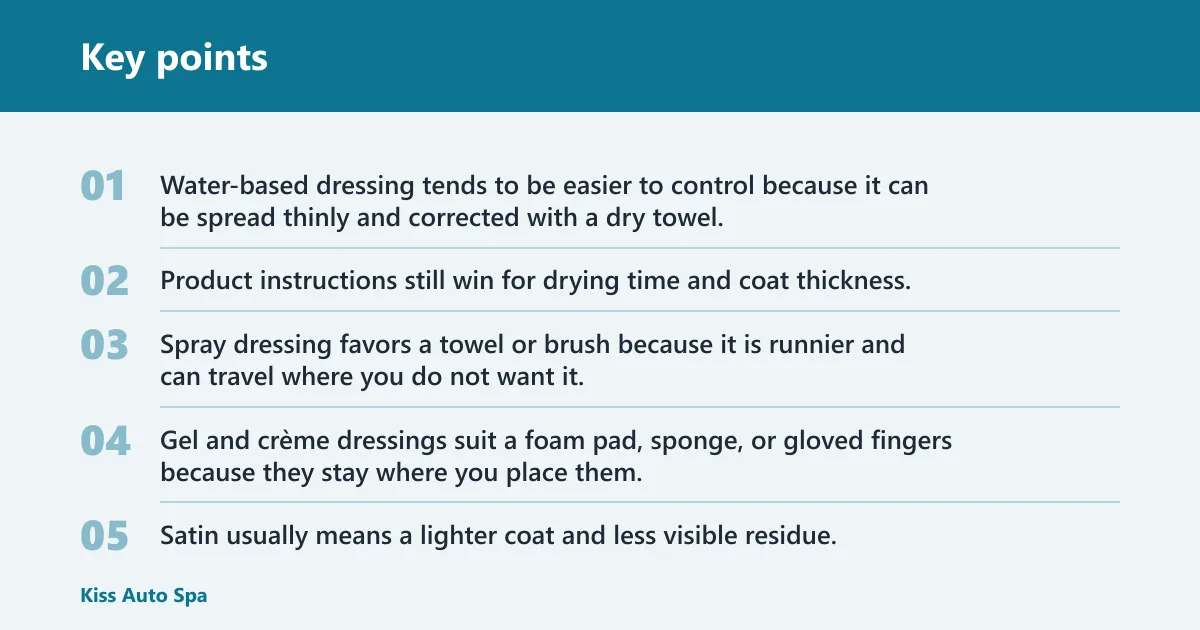
Water-based dressing tends to be easier to control because it can be spread thinly and corrected with a dry towel. Silicone-based formulas often produce a higher-gloss finish, but they can sling more if you load them heavily or use the wrong tool. Product instructions still win for drying time and coat thickness.
Spray, gel, and crème product behavior
Spray dressing favors a towel or brush because it is runnier and can travel where you do not want it. Premier recommends applying product to a foam applicator pad rather than directly to the tire, and the pad article says a small amount should go onto the pad itself.
Satin versus wet-look gloss
Satin usually means a lighter coat and less visible residue. Wet-look shine needs more product, so the margin for error gets smaller and sling becomes more likely. If you are using only household items, start with satin and build toward more gloss one thin pass at a time.
How do you keep tire shine from slinging off?
Use less product, spread it thin, and give it time to set before the car moves. Sling happens when too much product is applied or the wrong product type is used, and even water-based dressing still needs 10 to 15 minutes before the vehicle moves. A final dry wipe helps if the surface still looks wet.
-
Thin the coat.
Add only enough to make the sidewall look evenly damp, not glossy-wet. A light coat is easier to control and less likely to fling onto paint or wheels. -
Let it dry.
Wait 10 to 15 minutes before driving as a practical starting point, then follow the label if it asks for more time. Drying time is critical for reducing sling. -
Buff the surface.
If the tire still looks shiny-wet, wipe it again with a clean microfiber towel. This removes loose residue without stripping the finish completely.
Suppose a 245-width performance tire gets a wet-look dressing and the sidewall still beads product after 5 minutes. Do not drive off and hope for the best. Wipe the excess, wait longer, and check the shoulder of the tire again before moving.
Common mistakes
The biggest errors are simple: dressing a dirty tire, using too much product, and moving the car before the coating dries. A towel with residue on it can also smear the finish and make the sidewall look patchy. The fix is slower application, not more product.
- Do not coat the sidewall before cleaning it with a tire brush.
- Do not flood the applicator; use a thin even coat and add more only if needed.
- Do not assume a wet-look formula is the best choice for every tire.
- Do not skip the dry wipe if the tire still looks glossy or tacky.
- Do not drive until the dressing has had time to set.
How often should you apply tire shine?
How often you reapply depends on the dressing type, the weather, and how much washing the tire sees. Water-based tire dressing is often described as lasting 2-4 weeks, so a practical schedule is to check it after washes and top up only when the finish fades. Reapply less often if the sidewall still looks even.
Can you use tire shine on interior?
Use only a product label that specifically allows interior use. Many tire dressings are made for exterior rubber and can leave a slick finish on interior plastics, pedals, or touch points. If you need a cabin dressing, use a product meant for interior trim instead of repurposing tire shine.
Frequently asked questions
What to apply tire shine with?
A clean microfiber towel is the best no-applicator fallback for most water-based or light spray dressings. Use a dedicated tire brush only for cleaning the sidewall before dressing.
Should tire shine go on a dirty tire?
No. Clean the tire first with a tire brush so dirt does not get sealed under the dressing. A dirty sidewall can leave the finish blotchy and can also push product into grime, which raises the chance of sling and uneven gloss.