Car Wax Spray vs Paste: Which Is Better for Beginners?
For beginners, Car wax spray or a liquid wax is usually better than paste because it is easier to apply thinly and buff off. Choose paste only after you can spread an even, nearly invisible layer. Get it wrong, and you waste product, leave streaks, or fight gummy residue that makes the finish look worse. This guide compares spray, liquid, and paste wax for home use, then gives a simple first-time choice rule.
This guide is part of our Car wax: how to choose and use it at home series.
| Decision factor | Car wax spray | paste | Winner |
|---|---|---|---|
| Effort and speed | Fastest to apply; often 10 to 15 minutes for a full car | Slower; often 45 to 90 minutes for a full car | Car wax spray |
| Streak and residue risk | Lower if you use a clean microfiber towel and light application | Higher for first-timers because over-application and haze timing matter | Car wax spray |
| Durability per coat | Shorter-lived; commonly described as a quick top-up | Longer-lived; often the more durable single-coat choice | paste |
| Cleanup difficulty | Usually easier, especially on trim edges and crevices | Harder to remove from seams and textured plastic | Car wax spray |
| Gloss character | Clear, quick shine | Deeper, warmer gloss, especially with carnauba-heavy formulas | paste |
| Best first-use format | Strong choice for quick maintenance and low-friction use | Better after you learn thin-application technique | Car wax spray |
Why ease matters more than durability
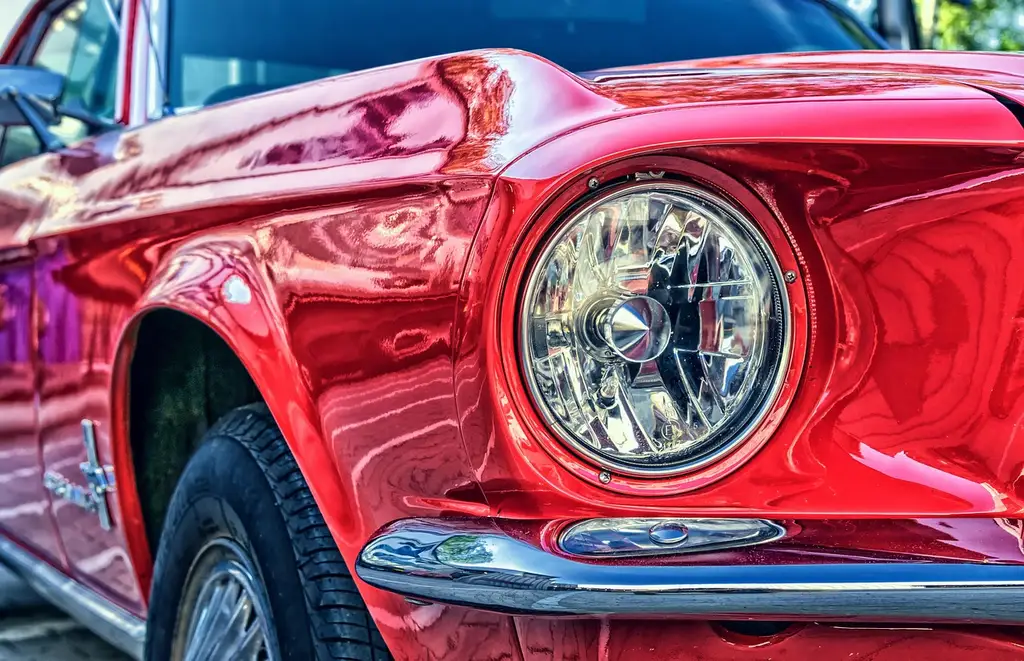
For a first wax job, the main goal is a clean, even layer on the clear coat, followed by easy removal and fewer rookie mistakes. Heavy application, streaking, residue in trim, hot-panel smearing, and dirty towel marks can spoil the result fast.
Spray wax is the practical everyday choice for most drivers. Product guidance commonly puts spray application at about 10 to 15 minutes for a full car, while paste is often listed at 45 to 90 minutes. That time gap matters more than chemistry on a first try.
Where liquid wax fits
Liquid wax is the middle ground. It usually goes on with a foam applicator pad, spreads more evenly than paste, and still gives more working time and durability than many spray formulas. For many first-time hand applications, it is the safest balance of control and payoff.
Liquid products are often synthetic or hybrid, which can improve durability over natural carnauba alone. That is why some bottles sold as “wax” behave more like polymer or hybrid sealants than old-school paste wax.
The core trade-off is simple: Car wax spray is faster and easier to remove, while paste usually lasts longer and can look warmer on dark paint. Liquid wax sits between them and often gives the lowest-friction hand application for a beginner who wants more control without jumping straight to paste.
What Car wax spray does well
Spray wax is made for speed. It is often used for quick touch-ups, maintenance after a wash, trim edges, crevices, and even glass when the product label allows it. It is also a common topper over existing wax or coating, which is why many people use it as a fast maintenance layer rather than a stand-alone long-term protectant.
What paste does well
Paste wax is the traditional tin-and-pad format. It can give a deeper, warmer gloss, especially in carnauba-heavy formulas, and it usually lasts longer per coat than spray wax. The trade-off is the need for haze time before buffing, plus more care around seams, textured plastic, and panel edges.
What liquid wax does well
Liquid wax is the compromise that many beginners actually need. It spreads with a foam applicator pad, makes thin coats easier to control, and tends to reduce the “too much product” problem that causes streaking and gummy residue. If you want a hand-applied product but do not want paste-level fuss, this is the format to look at first.
Which wax is easiest for beginners?
Car wax spray is the easiest first step because it is the least demanding to spread and remove, and it gives you the fewest ways to go wrong. Liquid wax is the safer hand-application middle ground if you want more control than spray without the same cleanup burden as paste. Paste is the hardest on a first try.
Why Car wax spray is the fastest start
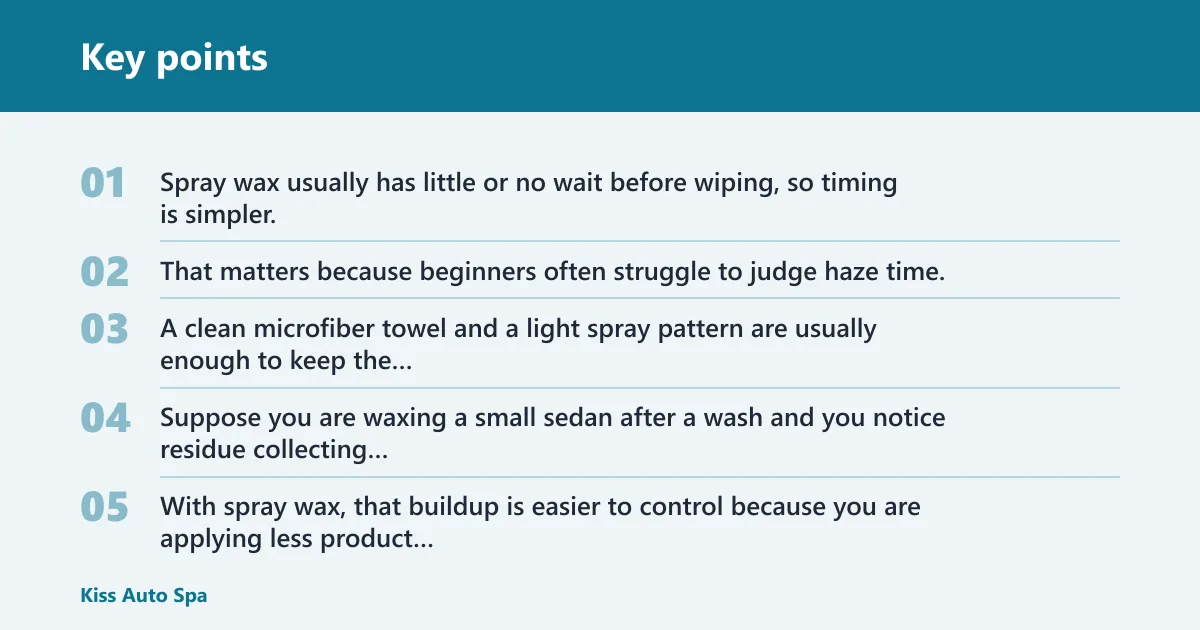
Spray wax usually has little or no wait before wiping, so timing is simpler. That matters because beginners often struggle to judge haze time, especially on warm panels or in uneven lighting. A clean microfiber towel and a light spray pattern are usually enough to keep the process manageable.
Suppose you are waxing a small sedan after a wash and you notice residue collecting around emblems and window trim. With spray wax, that buildup is easier to control because you are applying less product in the first place, and you can wipe those areas immediately instead of waiting for a full haze cycle.
Why liquid wax is the safest hand-applied middle ground
Liquid wax rewards even strokes and thin coverage. A foam applicator pad helps you meter the product, so you are less likely to overload a panel. For someone who wants to learn the hand-wax process properly, liquid wax teaches the right habits without the pressure of paste-level timing.
Why paste is harder on a first try
Paste wax is less forgiving when you lay it on too thick. Thick application leaves more residue to remove, and if the product sits too long, buffing becomes harder and streaking becomes more likely. The haze step is useful, but it also adds one more timing decision that can trip up a new user.
Does paste wax last longer and look deeper?
Usually, yes. Paste wax often lasts longer per coat than Car wax spray, and carnauba-heavy pastes are associated with a deeper, warmer gloss. That said, the visual difference is smaller than many beginners expect if the paint is not clean or if the coat goes on too thick.
Carnauba gloss versus synthetic durability
Carnauba wax is the classic natural base linked to a warm finish. Synthetic wax and polymer wax formulas usually improve durability over carnauba alone, which is why many spray and liquid products rely on synthetic chemistry or hybrid blends. Some products marketed as wax are really polymer sealants or hybrids, not pure natural wax.
Why paste needs haze time
Paste wax is typically applied with a foam pad or applicator, then left to haze before buffing. That haze stage is where beginners often make mistakes: they either wipe too soon and leave smears, or wait too long and create stubborn residue. The product itself is not the problem; timing is.
A common first-timer mistake is assuming paste and spray require the same amount of product and buffing effort. If the panel is warm and the coat is thick, the residue can cling to seams and textured plastic. At that point, more buffing only makes the mistake more visible.
Where paste still makes sense for a beginner
Paste can still be a good choice if you can work slowly, in shade, on cool panels, and you are willing to practice thin application. It also makes sense if you care more about a traditional hand-wax feel and longer protection than about speed. Just do not make it the first format you reach for on a hot afternoon.
Wax decision matrix
This matrix maps the choice to the situation, not to brand hype. A beginner should choose the format that is least likely to fail on the first try, not the one with the biggest durability claim on the label.
| Scenario | Recommended format | Why |
|---|---|---|
| First-time waxer | Car wax spray | Fast, low-friction, and easier to remove without heavy haze timing |
| Time-crunched owner | Car wax spray | Lowest setup time and quickest cleanup after a wash |
| Dark-paint owner wanting maximum gloss | paste | Traditional carnauba-heavy formulas often give a deeper, warmer look on dark finishes |
| Owner seeking lowest-risk application | Liquid wax | Balanced spreadability, easier thin coats, and less over-application risk than paste |
First-time waxer
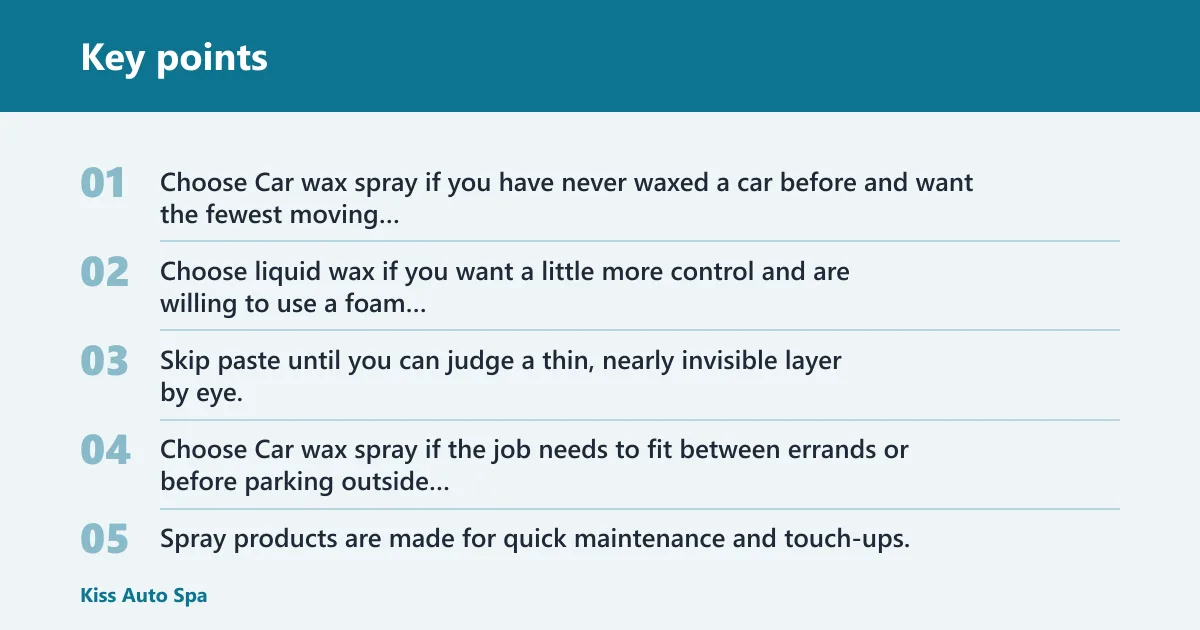
Choose Car wax spray if you have never waxed a car before and want the fewest moving parts. Choose liquid wax if you want a little more control and are willing to use a foam applicator pad. Skip paste until you can judge a thin, nearly invisible layer by eye.
Time-crunched owner
Choose Car wax spray if the job needs to fit between errands or before parking outside overnight. Spray products are made for quick maintenance and touch-ups, and they fit apartment parking, weekend cleanups, and repeat use over existing protection better than paste does.
Dark-paint owner wanting maximum gloss
Choose paste if you can work slowly and want the warmer, deeper look that carnauba-heavy formulas are known for. The finish still depends on paint prep and thin application, but this is the case where paste has a real visual reason to win.
Owner seeking lowest-risk application
Choose liquid wax if you want the easiest balance of control and protection without jumping straight to paste. It is the middle path: easier to spread than paste, less likely to streak than a rushed spray job, and generally friendlier for hand application.
Can you wax in direct sun?
You can, but it is a bad first-use plan for either format. Hot panels raise streak risk, make spray and paste residue harder to remove, and reduce your margin for error. Shade, cool paint, and a clean microfiber towel matter more than the product label when you are learning.
Why panel temperature changes removal difficulty
Warm paint can make wax flash too quickly or grab unevenly. That turns a simple wipe into a fight with smears, especially on dark colors and black trim. Paste also becomes more sensitive to haze timing when the panel is hot, because the residue can set unevenly.
What setup reduces mistakes
Work in shade if you can. Use a clean microfiber towel, not an old one with embedded grit. Keep a foam applicator pad for liquid or paste wax, and stop if the panel feels hot to the touch. If the paint is too warm, wait for cooler conditions instead of forcing the job.
Choose Car wax spray if… / Choose paste if…
Choose Car wax spray if you want the fastest first success, plan to do quick maintenance, need to wax trim edges or crevices, or want a topper over existing wax or coating. Choose paste if you have already learned thin application, want a more traditional hand-wax process, and can work slowly on cool panels without rushing the haze step.
Choose Car wax spray if…
- You want the least frustrating first wax job.
- You care more about easy application than maximum longevity.
- You are doing quick maintenance between fuller details.
- You want a product that is easier to remove from trim and seams.
Choose paste if…
- You want the deeper, warmer look often associated with carnauba.
- You are willing to wait for haze before buffing.
- You can avoid hot panels and direct sun.
- You already know how to spread a very thin coat.
Frequently asked questions
Is spray wax as good as paste wax for beginners?
For beginners, yes in the sense that it is usually the better first choice. Car wax spray is faster, easier to remove, and less likely to fail because of heavy application or bad haze timing. Paste may last longer, but the extra durability is not useful if the first application leaves streaks or residue.
Which car wax is easiest to apply by hand?
Liquid wax is often the easiest hand-applied option because it spreads with a foam applicator pad and gives you more control than paste. Car wax spray is even quicker to use, but liquid wax is the better hand-application format when the goal is a balanced first experience rather than the fastest possible job.
How long does spray wax last compared with paste wax?
Published guidance varies, but spray wax is commonly described as shorter-lived than paste wax. Sources in this comparison place spray durability in ranges such as 1 to 3 weeks, 2 to 6 weeks, or 4-8 weeks, while paste is often listed around 4 to 8 weeks or 2-4 months. Conditions change those results.
Does paste wax give a deeper shine than spray wax?
Often, yes. Paste wax, especially carnauba-heavy formulas, is associated with a deeper, warmer gloss. That said, clean paint and thin application matter more than the format alone. A poorly applied paste coat can look worse than a clean spray coat on the same car.
Can I use spray wax as maintenance after paste wax?
Yes. Spray wax is commonly used as a topper over existing wax or coating, so it works well as maintenance after paste wax. It is a practical way to refresh slickness and gloss without repeating a full paste application every time you wash the car.
What wax is least likely to streak or haze on first use?
Car wax spray is usually least likely to cause first-use streaking or haze problems because it does not depend on a long buffing window. Liquid wax is also beginner-friendly if you apply it thinly. Paste creates more risk when the layer is too thick or the panel is too warm.
Should a beginner choose spray, liquid, or paste wax?
A beginner should usually start with Car wax spray or liquid wax. Spray is the easiest and quickest; liquid is the safest middle ground for hand application. Paste should wait until you can spread a nearly invisible layer and buff it off cleanly without residue.
Can you wax a car in direct sun with spray wax or paste wax?
You can, but you should not if you are new to waxing. Direct sun and hot panels make both formats harder to remove and raise the chance of streaks. Shade, cool paint, clean microfiber towels, and a foam applicator pad are more important than which wax you choose.