Water-Based vs Silicone Tire Dressing: Which Is Better?
Water-based tire dressing is the better all-around pick for most DIY detailers because it gives tighter finish control and easier cleanup. Choose silicone tire dressing when you want maximum gloss and stronger water resistance. Pick the wrong formula, and you can get sling on paint, a greasy tire, or a look that fades too fast. This guide compares water-based and silicone dressings by finish control, sling control, and maintenance routine.
| Factor | Water-based | silicone tire dressing | Winner |
|---|---|---|---|
| Finish control | Matte to satin; easier to keep close to an OEM look | Wet, glossy, and darker-looking | Water-based |
| Sling and dust control | Lower sling risk when applied properly; lower dust attraction | Higher sling risk; higher dust attraction | Water-based |
| Durability and upkeep | Usually shorter-lived and needs more frequent reapplication | Usually longer-lasting and more water resistant | silicone tire dressing |
| Cleanup difficulty | Easier to wipe off excess and correct a heavy application | More likely to leave a greasy film if overapplied | Water-based |
Finish and gloss level
Which finish do you want?
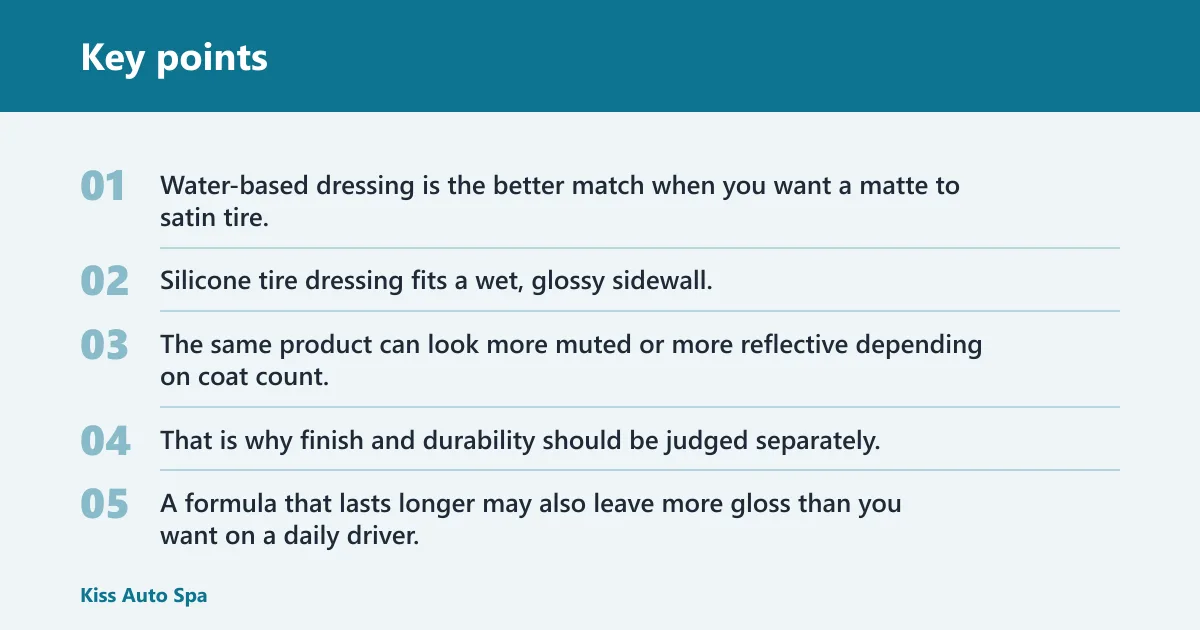
Water-based dressing is the better match when you want a matte to satin tire. Silicone tire dressing fits a wet, glossy sidewall. The same product can look more muted or more reflective depending on coat count, wipe-off, and cure time.
That is why finish and durability should be judged separately. A formula that lasts longer may also leave more gloss than you want on a daily driver.
Water-based formulas commonly use water as the main carrier, and some may include polymers, silicones, and UV inhibitors. The practical result is a finish that stays closer to the tire’s natural look, especially on tires with fine texture or raised lettering.
Silicone tire dressing is built for a wetter look. It can be water-based as an emulsion or carried in solvents, but the visual goal is usually the same: a darker, glossier sidewall with more shine.
Say your tire has tall raised lettering on a 255/45R18 sidewall. A thin water-based coat can leave the lettering readable and the rubber looking clean. A heavy glossy coat may pool around the letters and read as much shinier from five feet away.
Does silicone sling more than water-based?
Yes, silicone tire dressing tends to sling more often than water-based dressing when too much product stays on the sidewall. Sling usually comes from excess residue, a hot tire, or poor leveling, not from the chemistry alone. Thin coats and wipe-off reduce the problem on both formulas.
What causes sling
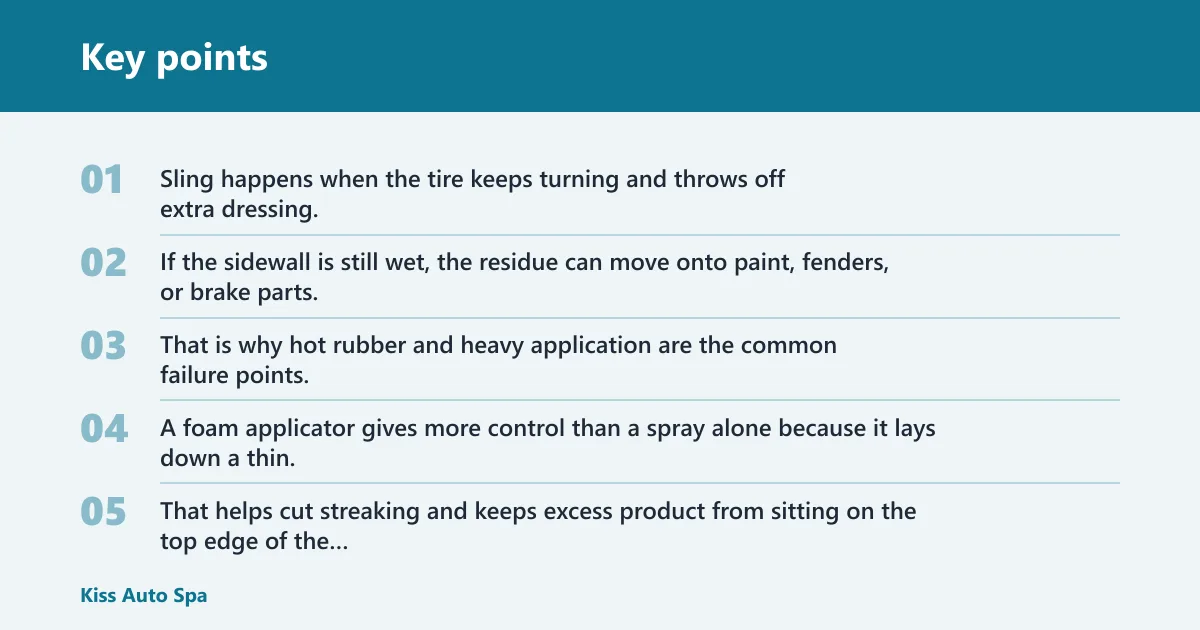
Sling happens when the tire keeps turning and throws off extra dressing. If the sidewall is still wet, the residue can move onto paint, fenders, or brake parts. That is why hot rubber and heavy application are the common failure points.
How to reduce sling with a foam applicator
A foam applicator gives more control than a spray alone because it lays down a thin, even film on the rubber sidewall. That helps cut streaking and keeps excess product from sitting on the top edge of the tire, where rotation can throw it outward.
Clean, dry tires matter here. If the sidewall still has road film or dressing residue from a prior coat, the new layer can slide around instead of leveling evenly.
Why spray applicators need wipe-off
Spray applicators are common with water-based and silicone emulsions, but they need leveling or wipe-off to keep the finish even. A quick wipe after application removes the surplus that would otherwise dry into streaks or migrate into sling.
A common first-timer mistake is spraying a hot tire after a drive and walking away because the sidewall looks glossy right away. The shine can look good for a moment, then the next drive leaves specks on the quarter panel.
Which lasts longer in real use?
Silicone tire dressing usually lasts longer than water-based dressing. Real-world life still depends on washing, heat, and how much product was left on the tire.
Typical durability ranges for water-based formulas
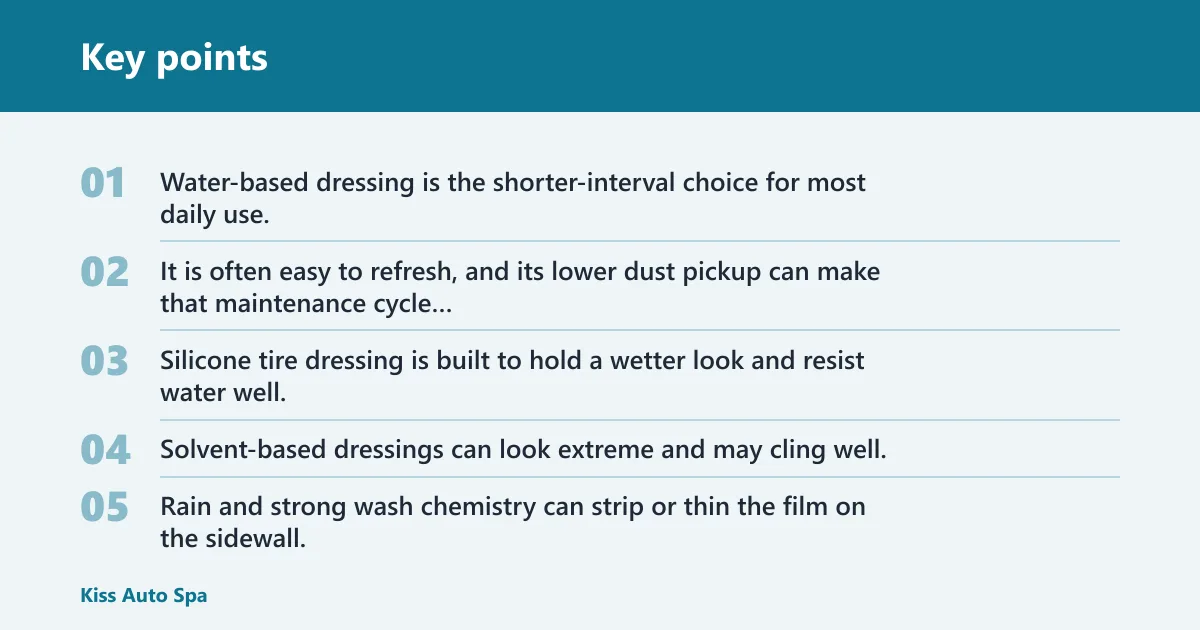
Water-based dressing is the shorter-interval choice for most daily use. It is often easy to refresh, and its lower dust pickup can make that maintenance cycle feel cleaner between applications.
Why silicone and solvent-based formulas often last longer
Silicone tire dressing is built to hold a wetter look and resist water well, so it often stays visible longer between wash cycles. Solvent-based dressings can look extreme and may cling well, but they also bring stronger odor and VOC concerns, which is why they are a separate category from silicone-based formulas.
What rain, washing, and heat do to the finish
Rain and strong wash chemistry can strip or thin the film on the sidewall, especially if the tire was not fully clean before dressing. Heat can also make a product move, which is one reason a freshly dressed tire can sling more after a long drive.
UV protection can help slow fading, but it does not repair cracked or unsafe rubber. If the sidewall is dry-rotted, no dressing is the fix.
Tire dressing decision matrix
| Use case | Finish | Sling risk | Dust pickup | Durability | Cleanup difficulty | Recommended formula |
|---|---|---|---|---|---|---|
| Daily driver | Subtle satin | Lower when applied thin | Lower | Moderate | Easier | Water-based, keeps the tire clean-looking without a heavy wet film |
| Show car | High gloss | Higher if overapplied | Higher | Higher | Moderate | silicone tire dressing, the wet look fits display use better |
| Off-road truck | Controlled satin | Moderate | Lower | Moderate | Easier | Water-based, easier to refresh after mud, wash water, and dust |
| Garage-kept weekend car | Soft sheen | Lower | Lower | Moderate | Easier | Water-based, good balance of appearance control and maintenance |
| Dealership prep | Bright gloss | Higher unless leveled well | Higher | Higher | Moderate | silicone tire dressing, the gloss reads stronger on the lot |
Choose Water-based if… / Choose silicone tire dressing if…
Choose Water-based if you want a matte OEM look, less visible residue, and a finish you can tune with light wipe-off. It is also the cleaner choice for drivers who want lower dust pickup and a shorter maintenance routine that does not feel greasy.
Choose silicone tire dressing if you want a glossier sidewall, stronger water resistance, or a display-ready look on tires that are already clean and dry. It fits jobs where appearance matters more than a subdued finish, and where a careful wipe-back step is part of the routine.
Skip both and inspect the tire first if the rubber is cracked, dry-rotted, or otherwise unsafe. Dressing can improve appearance, but it does not restore damaged sidewalls.
- Wash the tire sidewall until the rubber is free of old dressing and road film.
- Dry the sidewall fully before any product goes on.
- Use a foam applicator for thin, even coverage, or spray lightly and level the film immediately.
- Wipe away excess so no wet residue remains on the shoulder or tread edge.
- Check the finish after curing, then reapply only as needed for the look you want.
Frequently asked questions
Is water-based tire dressing better than silicone tire dressing?
Water-based is usually the better all-around pick because it gives more finish control, easier cleanup, and lower sling risk when applied properly. Silicone tire dressing is the better fit when the goal is maximum gloss and stronger water resistance rather than a restrained look.
Which tire dressing lasts longer, water-based or silicone?
Silicone tire dressing usually lasts longer than water-based dressing. Real-world life still depends on washing, heat, and how much product was left on the tire.
Does silicone tire dressing cause sling more often?
Yes, it tends to sling more often if too much product is left on the sidewall. The problem is usually excess residue, a hot tire, or poor leveling technique. A thin coat and a wipe-off step matter more than the label on the bottle.
Which gives a glossier finish, water-based or silicone?
Silicone tire dressing gives the glossier finish. Water-based dressing usually lands in the matte to satin range, while silicone formulas are built around a wet look. Coat count and wipe-off can shift either one, but the base chemistry still sets the ceiling on gloss.
Is water-based tire dressing safer for tires?
Water-based dressing is usually the safer choice when the tire is already healthy, because it is commonly described as safe and conditioning for rubber. That said, no dressing fixes cracked or unsafe sidewalls, and a poor application can still leave residue on any formula.
How do I stop tire dressing from attracting dust?
Use a water-based formula, apply it in a thin layer, and wipe off the extra. Water-based products are described as having low dust attraction, while solvent-based formulas are described as having high dust attraction. A clean, dry tire also keeps dust from sticking to old film underneath.
Which tire dressing is easier to apply and wipe off?
Water-based dressing is usually easier to apply and wipe off because it is easier to level into a thin film. Silicone tire dressing can still go on cleanly, but it is less forgiving if you leave excess behind, especially on warm rubber or on tires with deep texture and lettering.