Car Wax: How to Choose and Use It at Home
Choose car wax by time, climate, and paint condition: spray for fast upkeep, liquid synthetic for the best one-step balance, paste for longer hand application, and wax only after washing and drying healthy clear coat. Pick the wrong product or apply too much, and you get streaks, dust attraction, wasted effort, and little real protection. This guide explains what wax can and cannot do, how to choose among spray, liquid, paste, carnauba, synthetic, and hybrid formulas, and how to apply wax by hand at home.
What does car wax actually do?
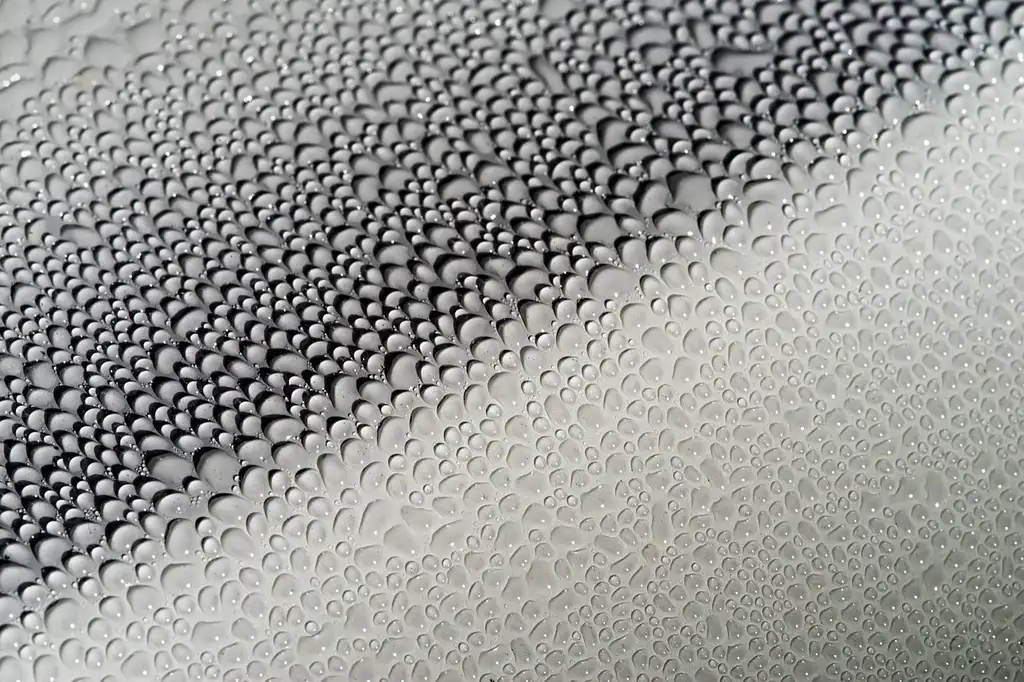
Car wax leaves a sacrificial layer on top of paint, more specifically on top of the clear coat on most modern vehicles. That layer can add gloss, improve water beading, and make later washing easier, but it does not permanently repair scratches, oxidation, peeling clear coat, or major paint damage.
Where wax sits in the paint system
On a modern car, wax sits above the clear coat. That matters because clear coat is the layer you work on at home, and clear coat can be polished, stained, or damaged separately from any wax sitting on top of it.
Wax is a maintenance product after washing. It is not a substitute for sound paint, and it cannot hold together failing clear coat.
What wax improves
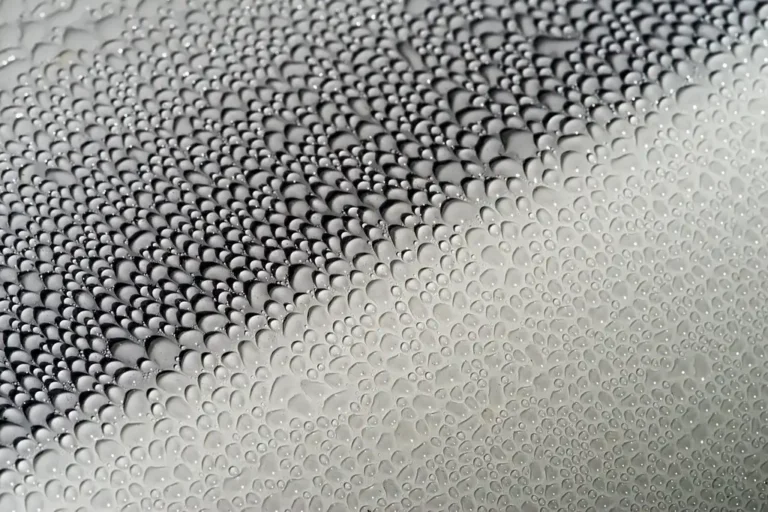
A wax film can make paint feel more slippery to the towel, help rinse water bead or sheet off with less cling, and cut down how firmly fresh dust and road film stick before the next wash. Those gains are real, but they are limited.
Some formulas can also make faint wash marring look less obvious for a while by adding gloss or filling minor texture. That is cosmetic hiding, not defect correction.
What wax cannot fix
Wax does not remove scratches. It does not reverse oxidation. It does not correct etched bird-dropping marks or repair clear-coat peeling.
If the paint feels rough, looks chalky, or has bonded contamination such as sap, brake dust, or rail dust, prep has to come first. If the clear coat is failing, wax will sit on the damage and wear away quickly.
📊 Car and Driver updated its wax guide in April 2026. Source: Caranddriver.
How should you choose car wax?
Choose wax by four variables that change real results at home: outdoor exposure, current paint condition, local weather, and how often you will reapply protection. Then separate format from chemistry so you do not mistake easy application for long service life.
Start with parking and climate exposure
An outside-parked daily driver in strong sun, rain, or humidity usually benefits more from synthetic or hybrid protection than a garage-kept weekend car. Car Care Guy says hot climates favor synthetic or hybrid waxes with stronger UV resistance, and that lines up with how many owners choose longer-wearing protection for exposed cars.
Garage storage lowers weather stress, but it does not remove dust, wash marring, bug remains, or water spotting. Protection still helps; you may simply need to reapply less often.
Filter by current paint condition
Clean, smooth, healthy paint is ready for wax after washing and drying. Rough paint, embedded grit, sticky sap, or heavy traffic film means the surface may need decontamination first so the wax can bond cleanly.
Bird droppings and tree sap are especially important. Waxing over them traps residue under the film, weakens bonding, and often leaves uneven gloss.
Match the wax to your maintenance interval
If you are willing to refresh protection often, spray or carnauba-heavy products can make sense. If you want fewer reapplications, a synthetic wax or sealant is usually the better fit for a daily driver.
Durability claims vary. The same source says durability depends on formula and driving conditions, not label claims, so treat label life as a ceiling rather than a promise.
A realistic home-user pattern is simple: spray wax for frequent top-ups, liquid synthetic for routine full applications, and paste only if you are comfortable spending more time per session.
Let skill level decide how forgiving the product should
Beginners usually do best with spray wax or an easy-spreading liquid. Car and Driver says spray wax is often the fastest way to add protection after a wash, with minimal setup and wipe time.
That ease matters because most first-time problems come from overapplying product, leaving it too long, or working on hot panels. A forgiving wax cuts those risks, but prep still decides the result.
How do you pick the right wax for black or dark cars?
Black and dark paint magnify everything — swirl marks, water spots, and dust — so choosing the wrong wax means looking at imperfections every time you walk past the car. The good news is that the three main wax families map cleanly to how you live with your vehicle: a ceramic-hybrid wax for daily drivers who want reliable protection with minimal effort, a carnauba spray or paste for weekend shows where depth and warmth matter more than longevity, and a synthetic sealant when you want the longest possible stay-out time between reapplications. What separates a good result from a frustrating one isn’t the shine claim on the bottle; it’s matching the product to your parking situation, wash routine, and willingness to prep the surface first. Black car wax selection breaks down the trade-offs so you can pick with confidence instead of guessing.
Why black cars need a different wax choice
Black paint shows every swirl, dust layer, and water spot, so the “best” wax is the one that matches how you use the car, not the one with the biggest shine claim. The supporting guide breaks down when a ceramic-hybrid wax is the safest all-around pick, when carnauba is worth it for deeper gloss, and when a synthetic sealant makes more sense for durability and easier upkeep. It also explains which factors matter most before you buy, including parking conditions, wash frequency, and how much visual masking you need.
If you want a practical shortlist instead of a one-size-fits-all answer, the black car wax guide helps you choose a product that fits your routine and keeps dark paint looking cleaner for longer.
Wax choice decision table
Choose Your Wax in 60 Seconds
| Decision factor | Spray | Liquid | Paste | Synthetic | Carnauba | Hybrid | Final recommendation | Why it fits |
|---|---|---|---|---|---|---|---|---|
| Parking situation: outside every day | Good for quick top-ups after washes | Good full-coat option | Slower for routine upkeep | Best fit | Shorter-lived in many cases | Strong second choice | Liquid synthetic | Better match for sun, rain, and frequent washing than a beauty-first wax |
| Parking situation: garage-kept or weekend use | Very convenient | Easy full application | Reasonable if time is available | Still works well | Very appealing here | Balanced option | Liquid carnauba or hybrid | Lower exposure lets you choose more for finish preference than maximum staying power |
| Paint color: black or very dark | Useful for maintenance between major wax jobs | Easiest way to get even coverage | Can give careful, controlled coverage | Works if residue is buffed cleanly | Warm look many owners like | Often the safer middle ground | Liquid hybrid | Dark paint shows haze fast, so easy wipe-off matters as much as shine |
| Paint color: light silver, white, beige | Fine for convenience | Strong all-around choice | Optional if you enjoy the process | Excellent practical pick | Works, though visual difference is subtler | Very good | Liquid synthetic | Light paint hides minor residue better, so the practical durability gain is usually the main reason to wax |
| Skill level: first-timer | Best entry point | Good once thin coats make sense | Higher chance of overuse and haze | Depends on formula | Depends on formula | Usually user-friendly | Spray hybrid or easy liquid synthetic | Lower effort and simpler wipe-off reduce streaks, high spots, and trim staining |
| Skill level: comfortable with hand waxing | Good for maintenance | Excellent | Good if slow, careful work is fine | Excellent for daily use | Good for appearance-focused use | Excellent all-around | Liquid synthetic or paste carnauba | Choice can shift from pure ease toward finish preference and application control |
| Maintenance interval: willing to reapply often | Very strong fit | Good | Less efficient for frequent touch-ups | Optional | Good fit | Very good | Spray wax or liquid carnauba | Fast products work when regular upkeep is part of the routine |
| Maintenance interval: wants fewer reapplications | Usually not the first choice alone | Best format balance | Possible, but more work | Best fit | Usually less ideal | Strong option | Liquid synthetic or durable hybrid | Lower maintenance goal points toward engineered protection and easy, even coverage |
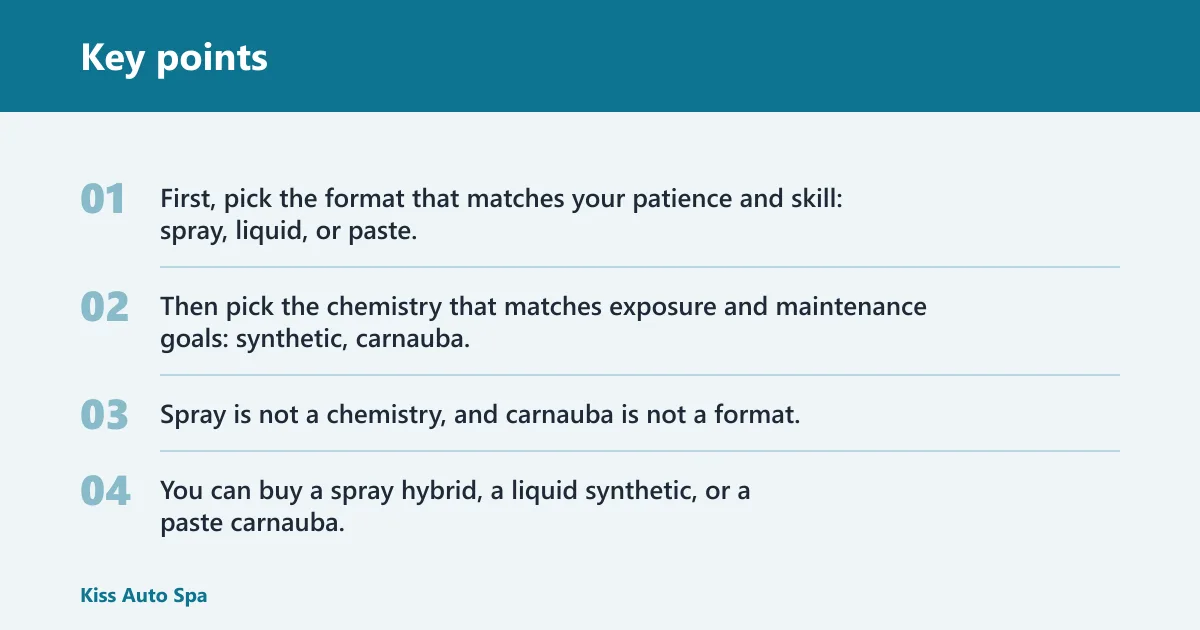
Read the table in two passes. First, pick the format that matches your patience and skill: spray, liquid, or paste. Then pick the chemistry that matches exposure and maintenance goals: synthetic, carnauba, or hybrid.
That separation prevents a common mistake. Spray is not a chemistry, and carnauba is not a format. You can buy a spray hybrid, a liquid synthetic, or a paste carnauba.
Which wax type fits your car?
The right wax type depends on whether appearance, durability, or balance matters most for your use. Carnauba leans toward warm gloss and shorter cycles, synthetic leans toward longer-lasting protection for daily drivers, and hybrid formulas aim for a middle ground that works well for many home users.
Carnauba wax for warm gloss and shorter cycles
Carnauba wax is the traditional choice many owners associate with a warm-looking finish. It is often sold in liquid or paste form, and paste versions are especially tied to classic hand-wax routines.
Its tradeoff is service life. In ordinary use, carnauba products typically need more frequent reapplication than synthetic options.
Picture a dark coupe that lives in a garage and comes out on fair-weather weekends. A carnauba wax makes sense there because the owner can prioritize finish character over maximum weather resistance.
Chemical Guys describes Pure 3X Hardcore Carnauba Paste Wax as blended with premium Brazilian white and yellow carnauba wax, which is a good example of how traditional carnauba products are positioned.
Synthetic wax or sealant for daily-driver durability
Synthetic wax, often called paint sealant, is made for longer-lasting protection and usually suits clear-coated daily drivers better than a traditional carnauba product. It is the practical default for cars that sit outside, get washed often, or see mixed weather through the week.
That does not mean every synthetic lasts the same amount of time. Formula, wash frequency, parking, and climate still control the real result.
The same source describes Jet Seal as lasting up to one year. Treat that as a brand claim for that product, not a fixed rule for all synthetic waxes.
Hybrid wax for balanced shine and protection
Hybrid wax blends carnauba and synthetic ingredients. The point is balance: more gloss character than some pure sealants, with better staying power than many traditional waxes.
For many homeowners, hybrid is the least risky single answer because it covers a wide range of climates and habits. Some are sold as full waxes, others as maintenance toppers, and some include ceramic-infused ingredients.
The same source describes HydroBlitz Hybrid Ceramic Spray Wax as a one-step shine and protection product. That is useful language for what many spray hybrids are trying to do, though they are still not the same as a professional coating.
When a ceramic-infused topper makes sense
A ceramic-infused spray topper makes sense when the paint is already in good shape and the goal is quick maintenance after washing. It is less useful if the surface is contaminated, streak-prone, or neglected, because no topper can solve bad prep.
Say your crossover sits outside under a maple tree, gets washed twice a month, and still feels gritty after drying. A topper is too soon; the bonded contamination has to be removed first.
Which format is easiest to use at home?
For most DIY owners, spray wax is easiest, liquid wax is the best full-application middle ground, and paste wax is the slowest but gives deliberate coverage. Ease of use is about spreading, wipe-off, and mistake recovery, not about whether the product is carnauba, synthetic, or hybrid.
Spray wax for fast maintenance coats
Spray wax is the speed option. Car and Driver lists Meguiar’s Quik Wax as its best spray wax pick and says Quik Wax is applied by simply spraying and wiping.
That format works best after a wash, when the paint is already clean and the goal is to refresh gloss and beading in a few minutes. It is also beginner-friendly because there is less product to overload onto the panel.
Many spray waxes are less durable than liquid or paste products in everyday use. That makes them great maintenance tools, not always the best stand-alone choice for a hard-used car.
Liquid wax for the easiest full application
Liquid wax is the common sweet spot for home users. It usually spreads more smoothly than paste, can cover a full vehicle efficiently, and is often forgiving if applied thinly on cool paint.
It can still streak if used too heavily or left too long. Car and Driver lists Chemical Guys Butter Wet Wax as its best liquid wax pick, says Butter Wet Wax dried within minutes, and lists its price at $20. The same source says Butter Wet Wax is priced at $19.99. (Caranddriver)
Paste wax for slower, controlled coverage
Paste wax is the traditional format. It usually takes more effort to spread and buff, but some owners like the control it gives on a panel-by-panel hand-wax session.
Car and Driver lists Collinite 476 Super Doublecoat Wax as its best paste wax pick. That reflects why paste still has a place: owners looking for a deliberate, hands-on process and a classic wax feel still buy it.
Prep decides the result
Wash and dry before any wax touches the paint
Wax bonds best to clean, dry paint. Dirt, road film, bug remains, and old residue block even coverage and reduce how long protection lasts.
Use a proper wash first. Dry the car well, especially around mirrors, badges, and trim, because trapped water can creep out and create streaks while you buff.
When contamination calls for clay bar prep
If the paint feels rough after washing, bonded contamination is still there. That is when a clay bar or similar decontamination step makes sense.
Common contaminants can include tree sap, brake dust, industrial fallout, and stubborn road grime. Waxing over them often creates patchy gloss and short service life.
Why residue, sap, and brake dust shorten wax life
Wax needs clean contact with the clear coat. Contamination lifts the product away from the paint in spots, which weakens the film and makes residue harder to buff evenly.
A common first-timer mistake is waxing a 2-door car after a quick rinse, then noticing cloudy patches near the lower doors the next morning. That often happens because road film and bonded grit were still on the paint when the wax went on.
When polishing belongs before waxing
Polishing belongs before waxing only when the goal is defect correction, not routine protection. If the paint has oxidation, visible swirls, etched marks, or old haze that washing and clay cannot solve, polishing may be the right next step.
For a basic home wax job, keep the distinction clear: polish corrects, wax protects. Wax can hide mild marks for a while, but it does not remove them.
How do you wax a car by hand?
Wax a car by hand with a clean, cool, fully dried surface, a foam or microfiber applicator, and clean buffing towels. Work panel by panel in the shade, apply a thin coat, follow the product label for haze or wipe-off timing, and buff lightly until residue is gone.
Set up the panel-by-panel workflow
- Wash the car thoroughly.
- Dry it completely.
- Inspect the paint by touch and sight.
- Decontaminate rough areas if needed.
- Move the car into shade or wait for cool panels.
- Choose one small panel at a time.
- Keep separate towels for application mistakes and final buffing.
Apply a thin coat on cool paint in the shade
Thin wins. Heavy application does not mean more protection; it usually means more smearing and harder buffing.
Spread the product evenly with light pressure. On spray wax, that may mean a light mist and wipe. On liquid or paste, it means loading the applicator sparingly and covering the panel in a uniform film.
Suppose a black sedan hood is warm from afternoon sun even though the air feels mild. The wax starts flashing too fast, wipe-off drags, and streaks show immediately. The fix is to stop, cool the workflow down, and move to shade.
Buff off cleanly with the right microfiber timing
Follow the label because wipe-off timing varies by formula. Some products are wipe-on, wipe-off. Others need a short haze period before buffing.
Use a clean microfiber towel and turn it frequently. If residue smears, switch to a fresh side first before adding more product.
Add a second coat only when the label supports it
A second coat is optional, not automatic. Some products benefit from a later second application for more even coverage, while others do not need it.
Check the label for cure or wait guidance. Applying more product too soon can disturb the first layer and create fresh streaks.
Hand waxing without a machine buffer
If you want a clean finish without using a machine, hand waxing guide explains the simple workflow: work one small section at a time, spread a thin coat, wait for the wax to haze, and wipe it before it dries too hard. That matters because overworking a large area or leaving wax on too long can create streaks and make removal harder.
The article also covers the prep steps that help wax bond properly, the basic tools to keep nearby, and how to judge each section before buffing it off. It’s especially useful for trim, mirrors, and other tight spots where a buffer is awkward or unnecessary.
Mastering manual application techniques
Success with hand waxing relies on precise layering and timing. A thin, even coat applied panel-by-panel prevents the sticky residue that makes removal difficult, while hazing must match the specific product type. The linked guide breaks down the exact workflow for preparing the surface and buffing off different wax formats, from paste to spray, without leaving streaks.
This step-by-step breakdown of manual waxing technique is essential for avoiding common pitfalls like applying too much product. By understanding how to adjust your approach for older paint or hot panels, you ensure a durable finish and extend the life of your detailing investment.
Common waxing mistakes and quick fixes
Streaks, haze, and high spots
Streaking usually comes from too much product, hot paint, poor wipe-off timing, or moisture creeping from trim. Patchy haze often points to contamination or uneven spreading.
Fix light residue with a clean microfiber or a slightly damp microfiber. If the wax has dried stubbornly, a very small amount of the same product can reactivate residue so it buffs off more evenly.
Using too much product
Too much wax wastes product and makes buffing harder. It can also leave oily smears that attract dust.
If a panel looks greasy instead of clean and reflective, stop adding wax. Re-buff with a fresh towel, and if necessary lightly rewipe that area according to the product directions.
Wax on trim, badges, and textured plastic
Traditional paste and some liquids can stain textured black trim. Keep the applicator off porous plastic and around badge edges.
If residue gets onto trim, remove it early. Waiting makes cleanup harder, especially in warm weather.
Applying in heat, sun, or on a dirty surface
Direct sun and hot panels speed drying and raise the chance of streaks. A dirty surface scratches more easily during application and stops the wax from laying down evenly.
If the car was washed but still has sap dots, bird-dropping remains, or gritty bonded fallout, rewash or decontaminate the affected panels before waxing. Do not bury contamination under fresh product.
Best wax choices for common home-use scenarios
Outside-parked daily driver
Start with a liquid synthetic or a durable hybrid. The priority is repeatable protection against sun, rain, and routine washing, not a weekend-only show-car look.
If upkeep time is tight, pair the main wax with a spray maintenance product after later washes.
Black or dark paint
Dark paint shows haze, missed residue, and towel marks fast. Choose an easy-spreading liquid or hybrid with clean wipe-off before chasing old-school format preferences.
Carnauba can look excellent on dark paint, but only if the prep is clean and the residue is fully buffed away.
Newer clear-coated car
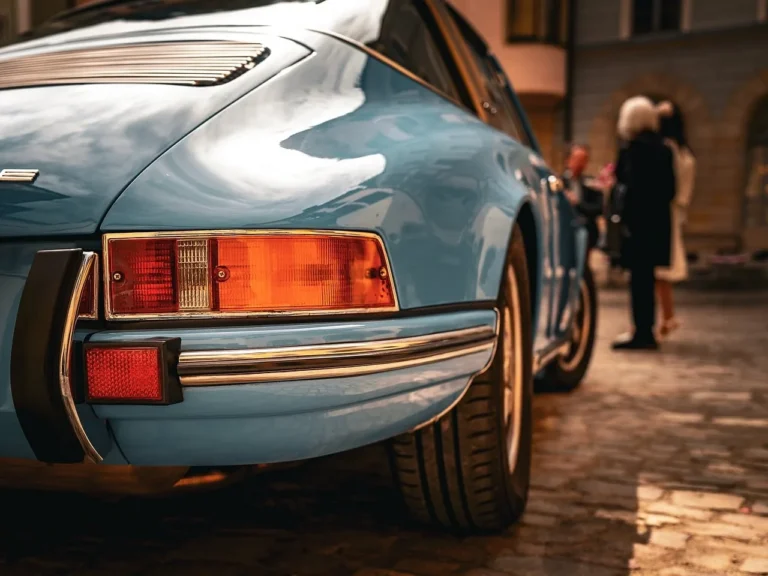
Most newer vehicles have clear coat, and that surface usually pairs well with synthetic wax or sealant for practical maintenance. The paint does not need wax to exist, but it can benefit from a sacrificial layer that makes washing easier and leaves less bare exposure to the elements.
Low-maintenance owner who wants fewer reapplications
A liquid synthetic is usually the best answer. It is easier to apply than paste and generally better suited to longer intervals than many spray or carnauba-heavy products.
If convenience matters more than maximum life, use a spray wax more often instead of fighting with a product you dislike using.
Frequently asked questions
Do modern cars need wax?
Modern cars do not require wax in order to function, but clear-coated paint still benefits from a sacrificial protective layer. Wax can improve gloss, support water beading, and make routine washing easier. It still will not repair scratches, oxidation, or clear-coat failure.
What’s a good car wax
A good car wax is the one that matches your use case. For quick upkeep, Car and Driver lists Meguiar’s Quik Wax as its best spray wax pick. For a liquid, it lists Chemical Guys Butter Wet Wax. For paste, it lists Collinite 476 Super Doublecoat Wax.