Why Did Waterless Wash Leave Streaks or Scratches?
If the mark wipes off with a damp microfiber, it is likely residue streaking; if it stays after a second, dry pass, it may be micro-marring. Ignoring the difference can waste time, add more towel passes, and make a good finish look worse. This guide shows how to tell each fault apart and which towel, temperature, and panel conditions usually cause it.
Common causes of streaks and how to inspect them
Streaks usually come from product film left behind, not from paint damage. The common triggers are too much spray, a hot panel that flashes fast, a towel already loaded with soil, or a final wipe that was skipped. Sun on a hood or roof raises the risk because the product dries before you can level it.
Inspect before you wipe again
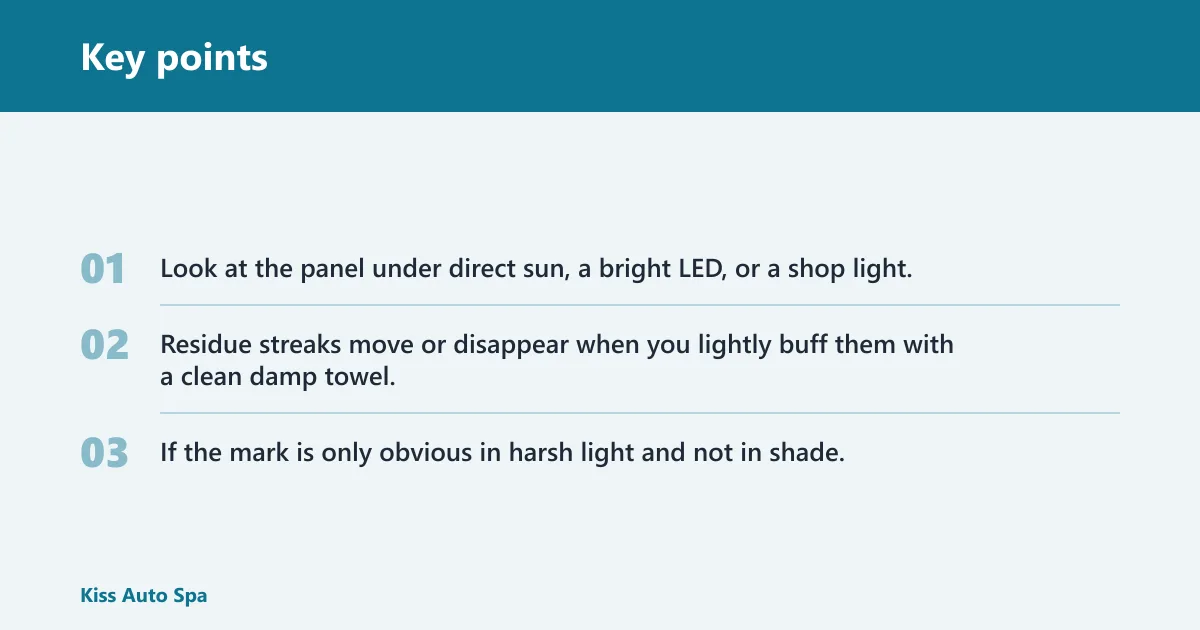
Look at the panel under direct sun, a bright LED, or a shop light. Residue streaks move or disappear when you lightly buff them with a clean damp towel, while micro-marring stays visible as fine lines or arcs. If the mark is only obvious in harsh light and not in shade, film is more likely than scratching.
What you’ll need
- 2 to 4 clean plush microfiber towels for paint
- 1 separate clean towel for the final dry buff
- A low-pile microfiber towel for glass, if needed
- A separate towel for wheels and trim
- Waterless wash product approved for light dust and road film
- Bright inspection light, such as an LED or shop light
Waterless wash troubleshooting matrix
This matrix separates streaks, haze, and scratches by symptom, cause, check, and fix. Use it before you add more product or reach for another towel. If more than one scenario fits, stop and move to a full wash.
| Symptom | Likely cause | Verification step | Fix |
|---|---|---|---|
| Light streaks after drying | Too much product on the panel | Wipe one section with a dry, clean towel; if the film lifts, it is residue | Use about 1 to 2 sprays per 2 ft x 2 ft section, then buff with a fresh towel |
| Smears on hood or roof | Hot panel | Touch the panel lightly; if it feels hot to the hand, expect fast flashing | Move the car into shade and wait until the panel is cool to the touch |
| Streaks after one towel pass | Overloaded towel | Fold the towel and inspect the working face for dark soil lines | Flip to a clean face or switch towels before the next section |
| Haze in direct light | Product dried before final leveling | Check the area under an LED at a low angle | Add a light final buff with a clean dry towel |
| Fine straight marks | Dirty paint dragged under pressure | Run the area under light again; fixed lines that stay in place point to micro-marring | Stop and wash with water or rinseless solution |
| New marks after repeated wiping | Heavy pressure | Check whether the marks follow the wipe path | Use straight, light passes only; do not scrub |
| Streaks on glass but not paint | Wrong towel type or residue on glass | Inspect the towel edge for lint or film | Use a separate low-pile glass towel and a cleaner final wipe |
| Dull look on matte paint | Overwork on a sensitive surface | Check in diffuse light; matte finishes show burnished areas more easily | Use minimal product and only very light passes |
| Random gritty drag | Paint contamination | Run a clean finger in a gloved hand over the panel; grit or bonded dirt means the surface is too dirty | Pre-rinse or switch to a traditional wash |
| Streaks return after another pass | Towel still too contaminated | Inspect the towel face after one panel | Retire that towel from paint and use a fresh one |
Stop-use threshold: if the panel feels gritty, if dust turns to visible road film, or if one towel cannot clear a 2 ft x 2 ft section without leaving dirt lines, stop waterless washing and move to a rinseless or traditional wash.
How do I fix streaks left by waterless wash?
Start with the least aggressive fix, a clean dry buff. If the mark lifts with a fresh microfiber, the problem is residue, not damage. If it does not change after one careful pass, do not keep rubbing; that raises the chance of micro-marring on dirty paint.
- Spray the affected section once or twice more if it is still damp, or mist the towel lightly.
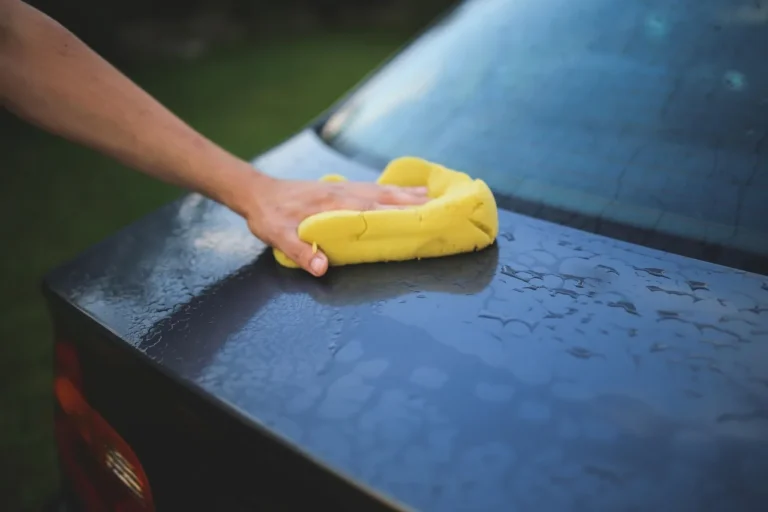
- Wipe with a clean plush towel using straight, light passes.
- Turn to a fresh towel face after one panel, or after any visible soil.
- Finish with one dry buff using a separate clean towel.
- Stop if the line remains under LED light and switch to a full wash.
Common first-timer mistake: one towel for too long
Say your sedan has dust on the doors and heavier road film on the lower rear quarter. If the same towel is used across both areas, the lower panel loads the fibers with grit and the next pass can leave faint lines. Multiple clean towels matter because a loaded towel turns a wipe into a drag.
Can a waterless wash scratch paint?
Yes, it can create micro-marring when trapped grit gets dragged across clear coat. The risk rises with dirty paint, a towel that has already picked up grit, and pressure that presses particles into the finish. The problem shows up most clearly in sunlight or under LED inspection, not always in shade.
What surfaces raise the risk?
Clear coat paint is the main concern, especially on horizontal panels that collect dust. Matte paint is less forgiving because repeated wiping can leave dull patches. Ceramic-coated paint can still mar if contaminated. Glass and trim often need different towels and lighter pressure, because residue and lint show more quickly there.
Follow these steps
Use this process when the panel is lightly dusty, the paint is cool, and the towel stays clean enough to glide. Start with the least aggressive fix and keep the panel wet enough to float loose dirt. The goal is to keep contamination moving off the paint, then clear the leftover film before it dries.
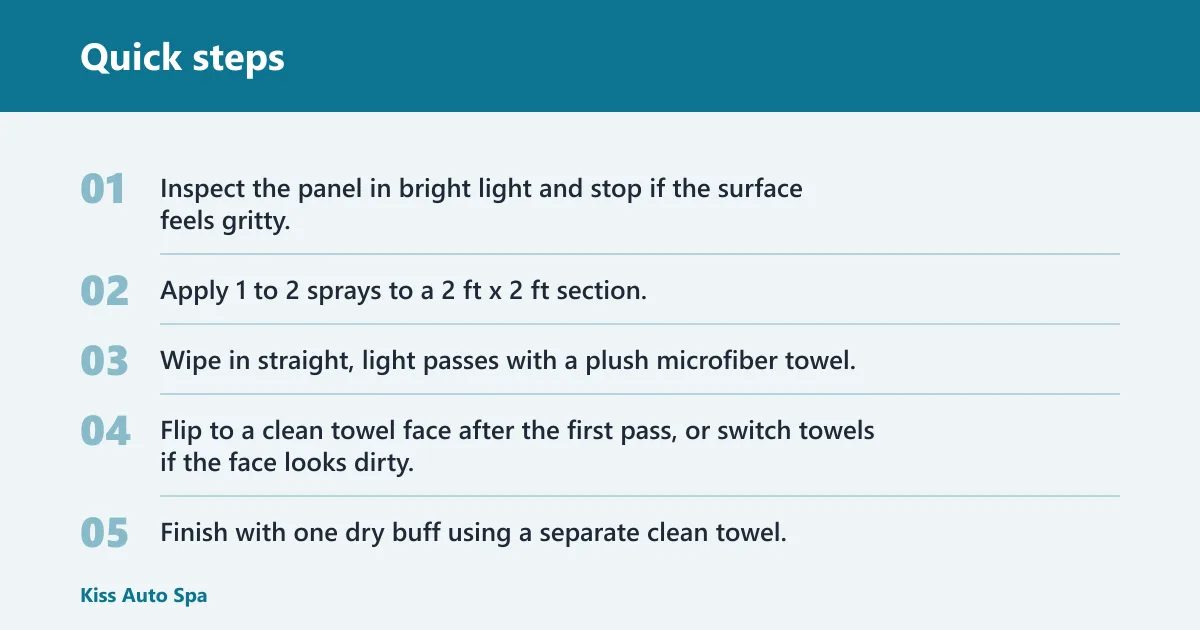
- Inspect the panel in bright light and stop if the surface feels gritty.
- Apply 1 to 2 sprays to a 2 ft x 2 ft section, or enough to leave a wet film without runoff.
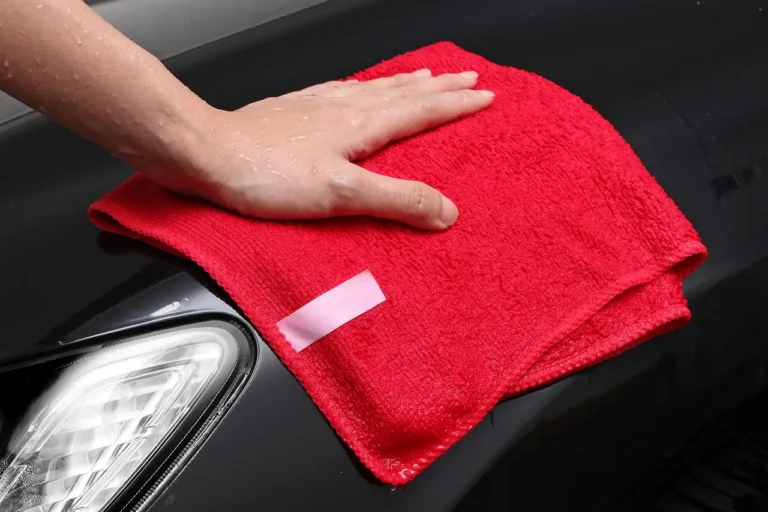
- Wipe in straight, light passes with a plush microfiber towel.
- Flip to a clean towel face after the first pass, or switch towels if the face looks dirty.
- Finish with one dry buff using a separate clean towel.
Why multiple towels matter
A single towel can handle one clean section, then it needs a fresh face. For a full car, plan on several towels so paint, glass, and wheels never share the same cloth. Separating them keeps wheel grit off the finish and cuts the chance of dragging contamination across clear coat.
When should you stop waterless washing?
Stop when the dirt is heavier than light dust or road film, when the panel is hot, or when you can feel grit under the towel. That is the point where the method stops being efficient and starts raising scratch risk. A rinseless wash is the next step for moderate dirt; a traditional wash is safer for heavy contamination.
Hot panels and direct sun
Roof and hood panels are highest risk because they heat up first. Hot paint shortens working time, so product flashes before you can level it. If you cannot keep the panel cool to the touch, move the car to shade and wait. If the sun is intense and the panel stays hot, do not continue.
Picture a black hood parked outside at noon. A quick spray looks fine for a few seconds, then the product dries into streaks before the towel makes a second pass. The fix is not more pressure; the fix is a cooler panel and a smaller section size.
Common mistakes
- Using one towel too long: retire it as soon as the working face looks dirty.
- Working a hot hood or roof: move to shade and wait for a cool-to-the-touch panel.
- Trying to save a dirty panel with extra pressure: stop and wash normally.
- Skipping the final buff: use a clean dry towel to remove the last film.
- Using the same towel on paint, glass, and wheels: keep separate towels for each surface.
Why haze appears after drying
Haze usually means a thin film is still on the surface, or the towel left faint lint and residue lines behind. It is most visible under LED or shop light. A clean final buff usually removes it. If the haze remains after one careful pass, contamination or heavy soil is the more likely issue.
Frequently asked questions
Why did my waterless wash leave streaks?
Streaks usually come from product that dried before it was fully wiped off, or from a towel that was already loaded with dirt. Check the panel under bright light, then use a fresh microfiber and a dry final buff. If the surface still feels gritty, stop and wash it normally.
Did I use too much product with a waterless wash?
Too much product often leaves a wet film that turns into streaks, especially on warm panels. A practical starting point is 1 to 2 sprays per 2 ft x 2 ft section, then adjust only if the towel glides too dry. More product should reduce drag, not leave puddles.
Probably, if the towel face picked up visible soil early. Fresh towels matter because a loaded towel can re-deposit dirt and create streaks or light marring. Use several towels for one session, and switch before the working face looks dark or rough.
Can dirty towels cause scratches with waterless wash?
Yes. A dirty towel can drag abrasive particles across the paint and leave micro-marring that shows in sunlight or LED light. Keep one set for paint, one for glass, and one for wheels. Replace a towel as soon as it feels tacky, rough, or visibly dirty.
Is my paint too dirty for waterless wash?
If the panel has heavy dust, bonded grime, or any gritty feel, it is too dirty for this method. Waterless wash is generally meant for lightly soiled paint only. A rinse, rinseless wash, or full wash is the safer choice once contamination can be felt under the towel.