Lint Roller vs Pet Hair Remover Roller for Car Seats
A reusable pet hair remover roller is the better choice for most car seats: use a lint roller for quick surface hairs, and pick the reusable tool for embedded hair and lower cost per clean. Choose the wrong tool and you waste sheets, leave hair in seams, and pay more over time. This guide compares loose-hair pickup, embedded-hair performance, and total cost per clean.
| Decision factor | Lint roller | pet hair remover roller for car seats | Winner |
|---|---|---|---|
| Loose hair pickup | Strong on surface hair and light lint | Strong on surface hair, with better carryover between passes | pet hair remover roller for car seats |
| Embedded hair pickup | Often weak on fine undercoat and hair set into weave | Usually better on packed-in hair and repeated passes | pet hair remover roller for car seats |
| Fabric safety | Good on many seats, but adhesive can leave residue on some upholstery | No adhesive sheets, so lower residue risk; can still snag delicate fabric if pressed hard | pet hair remover roller for car seats |
| Speed on large seats | Fast for a quick top layer, but sheet changes can slow you down | Better for repeated full-seat cleaning because there are no sheet swaps | pet hair remover roller for car seats |
| Cost per 10 cleanups | Higher once sheet use adds up | Lower because there are no refill sheets | pet hair remover roller for car seats |
How disposable and reusable rollers work differently
The trade-off is straightforward. A disposable adhesive lint roller is quick for loose hair on the surface, while a reusable pet hair remover roller usually wins on embedded hair, repeat use, and total cost per cleanup.
Consumer Reports reportedly tested disposable and reusable lint removers on cat hair, and it compared several disposable rollers with several reusable models. It also judged effectiveness by the number of passes required on fleece, velvet, dress shirts, and corduroy. That matters in cars because seat fabric, seams, and hair type change the result.
What each tool is built to do
A disposable adhesive lint roller uses sticky sheets. Each sheet traps loose debris, but performance drops as the sheet fills, and you have to peel and replace it. A reusable pet hair remover roller uses a reusable pickup surface instead, so it avoids ongoing refill cost and fits frequent car cleanup.
The difference shows up fast in a seat with short fur. Sticky sheets can grab the first layer well, then slow down when the surface has finer hair or a lot of embedded strands. Reusable rollers often need a few extra passes, but they keep working without a sheet swap between every small patch.
Car seat cleaning decision matrix
| Criterion | Lint roller | pet hair remover roller for car seats | Recommendation by seat fabric type |
|---|---|---|---|
| Loose hair pickup | 4/5 | 4/5 | Both work on woven cloth and smooth microfiber |
| Embedded hair pickup | 2/5 | 5/5 | Reusable wins on cloth, fleece, and corduroy with set-in hair |
| Fabric safety | 3/5 | 4/5 | Reusable is the safer default on delicate weave because there is no adhesive residue |
| Speed on large seats | 3/5 | 4/5 | Reusable is better for full front seats and back benches |
| Cost per 10 cleanups | 2/5 | 5/5 | Reusable is the better value for frequent cleaning |
Use the table seat by seat. If the hair sits on top, either tool can work. If the hair has worked into the weave, the reusable roller usually pulls ahead because it does not run out of adhesive sheets mid-job.
Loose hair pickup score
For loose hair on the seat surface, both tools can do the job. The lint roller often feels faster at first because the sticky sheet grabs visible strands immediately. The reusable roller stays more consistent across repeated passes, which matters when a seat has a fresh layer of hair after a ride.
Embedded hair pickup score
Embedded hair is where the gap widens. Fine undercoat and short fur can sit below the top fibers of cloth, fleece, or corduroy, so a sheet that works on the first pass may leave a gray haze behind. Consumer Reports evaluated rollers by effectiveness and the number of passes required, which is the right way to think about set-in hair in a car.
Say your rear bench has black dog hair on tan cloth. The top layer may look clear after one quick roll, but the weave still holds pale undercoat and short strands. That is the point where a reusable roller usually becomes the better tool.
Fabric safety score
Disposable adhesive rollers can leave sticky residue on some upholstery, especially if you press hard or keep rolling after the sheet has loaded up. That risk is small on many seats and more noticeable on delicate or textured fabric. Reusable rollers avoid adhesive, which lowers the residue concern.
That does not make the reusable tool risk-free. Heavy pressure can still snag loose weave or brush against raised fibers on velvet and corduroy. Light pressure matters more than force.
Speed on large seats score
On a small patch, a lint roller can feel faster. On a full seat, sheet exhaustion can slow you down, especially if the car carries a lot of fur. Reusable rollers often keep moving because you are not stopping to tear off spent sheets.
Picture a minivan bench with hair across the seatback, cushion, and bolster. A disposable roller can clear the first area quickly, then bog down when the sheet fills. A reusable roller is slower at the start on some fabrics, but it usually keeps a steadier pace across a larger panel.
Cost per 10 cleanups score
This is where reusable tools usually win. Disposable rollers cost more each time you peel through sheets, while reusable rollers have no refill sheets to buy. Our Home Finds says reusable rollers need no refills and can have no ongoing refill cost, which is the key difference when you clean a car more than once in a while.
For a simple comparison, think in cleanup sessions instead of sticker price. If one disposable roller burns through several sheets on each cleanup, the 10-cleanup cost climbs with every fresh sheet. A reusable roller has a higher up-front cost in many cases, then stays flat after that.
Which roller is better for loose hair and embedded hair?
For loose hair, a lint roller is often enough on the first pass. For embedded hair, especially fine undercoat in cloth seats or seams, the reusable pet hair remover roller usually works better. The difference is less about pet size and more about whether the hair sits on top or has worked into the fabric.
Short fur on visible seat surfaces
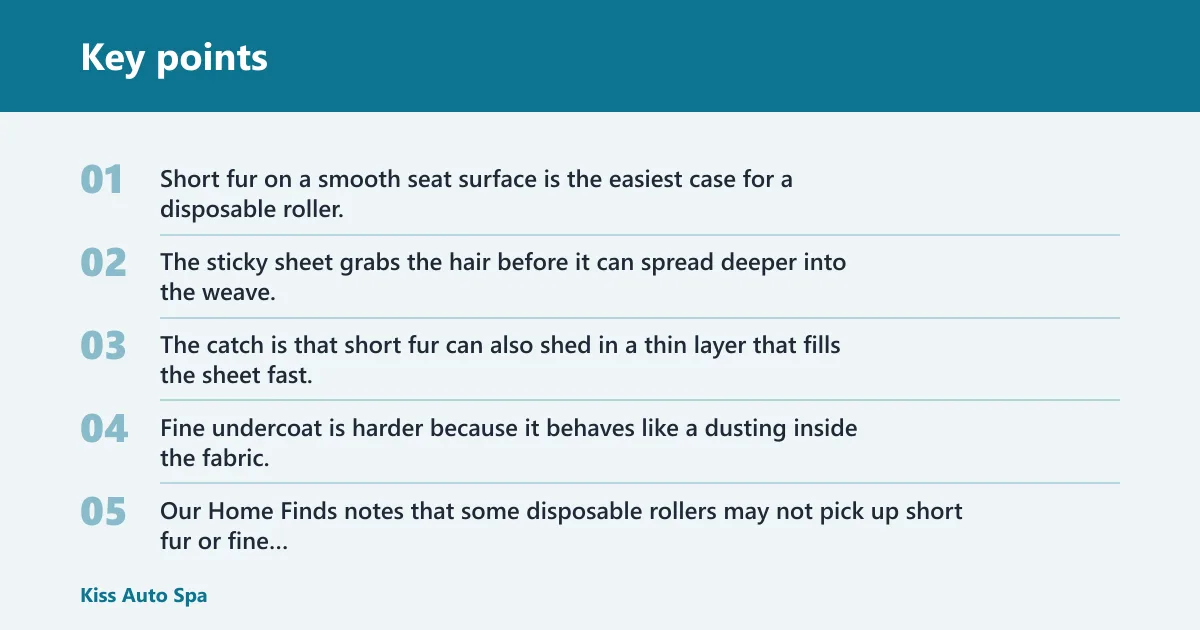
Short fur on a smooth seat surface is the easiest case for a disposable roller. The sticky sheet grabs the hair before it can spread deeper into the weave. The catch is that short fur can also shed in a thin layer that fills the sheet fast, so speed can fall off in a larger car.
Fine undercoat in seams and weave
Fine undercoat is harder because it behaves like a dusting inside the fabric. Our Home Finds notes that some disposable rollers may not pick up short fur or fine undercoats. A reusable roller is a better fit when the goal is to lift that trapped layer from cloth or fleece rather than just clear the top.
Black hair on dark upholstery
Black hair on dark fabric is easy to miss until you shift the light. On dark upholstery, surface hair may look gone after a quick pass while embedded strands still cling in the weave. A reusable roller gives you a better chance of clearing that second layer without burning through sheets.
How car upholstery fabric changes the result
Seat fabric changes how each roller behaves. Consumer Reports tested rollers on fleece, velvet, dress shirts, and corduroy, which is useful because those fabrics react differently to pressure and tackiness. In a car, woven cloth, microfiber, fleece, velvet, and corduroy do not all respond the same way.
Cloth seats
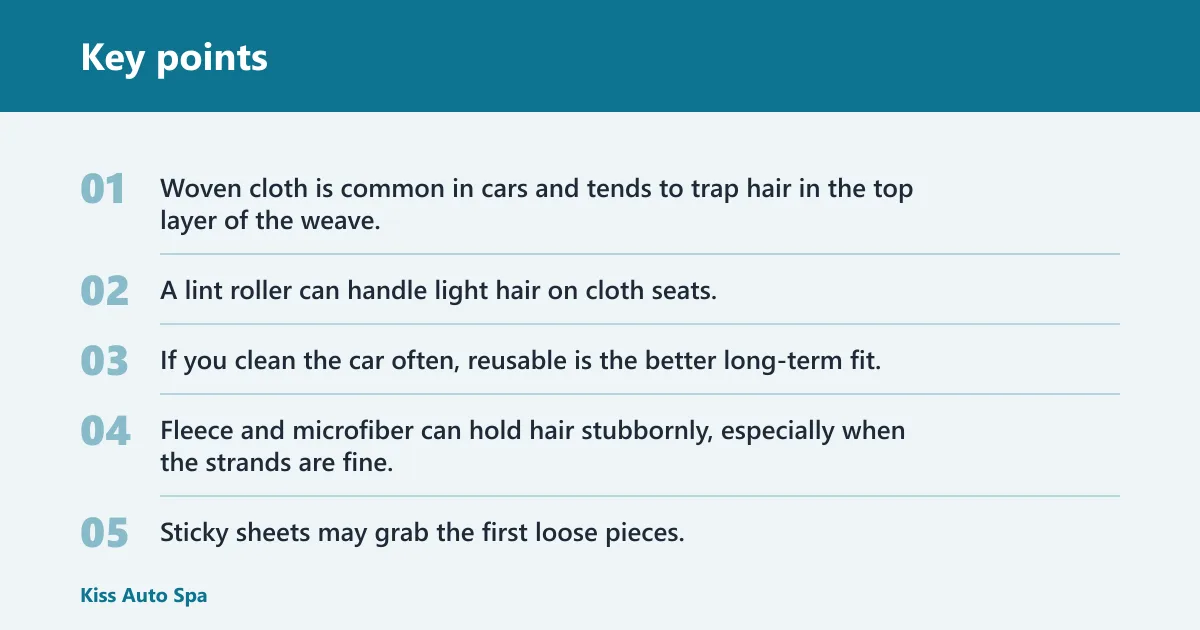
Woven cloth is common in cars and tends to trap hair in the top layer of the weave. A lint roller can handle light hair on cloth seats, but a reusable roller usually does better once hair starts working into the fibers. If you clean the car often, reusable is the better long-term fit.
Fleece and microfiber
Fleece and microfiber can hold hair stubbornly, especially when the strands are fine. Sticky sheets may grab the first loose pieces, but a reusable roller often clears the remaining film with fewer wasted sheets. These fabrics reward controlled, overlapping strokes instead of hard pressure.
Velvet and corduroy
Velvet and corduroy need more care because the nap can change direction and hold debris in the texture. A disposable lint roller can work for a light touch-up, but too much adhesive contact or pressure can be a bad fit for delicate pile. A reusable roller can be the better pick if you keep the pressure light and work with the grain.
Tight seams, bolsters, and creases
Car seats have seams, bolsters, and creases that catch hair where flat rollers do not reach cleanly. This is where pass count and pickup efficiency matter more than the first swipe. A smaller reusable roller can be easier to steer into the gap, while a disposable roller may waste sheets if you keep reworking the same crease.
Use short, overlapping strokes in the seams instead of long sweeps. Our Home Finds recommends short, overlapping strokes for couches and car seats, and that advice fits bolsters too.
Which roller is less likely to leave residue or damage fabric?
The reusable pet hair remover roller is usually less likely to leave sticky residue because it does not depend on adhesive sheets. A lint roller can still be safe on many seats, but residue risk rises when you keep rolling a sheet after it has loaded up or when the upholstery has a delicate finish. Heavy pressure is the bigger mistake for both tools.
Disposable adhesive sheet limits
Disposable sheets work best while they are fresh. Once the tacky layer fills with hair, lint, and dust, pickup drops and the chance of transfer or residue rises. If the sheet feels less grabby, peel it and move on rather than pressing harder.
Reusable pickup surface limits
Reusable rollers avoid adhesive, but they do not forgive neglect. Hair buildup on the pickup surface lowers performance, so you need to clear collected hair between passes. Keep the tool dry and clean, or it will lose efficiency.
When to avoid heavy pressure
Do not bear down on delicate weave, velvet, or worn cloth. Light pressure reduces snag risk and keeps the roller moving across the seat instead of digging into the fibers. If a spot is resisting, change direction or clean the tool before forcing it.
Choose Lint roller if… / Choose pet hair remover roller for car seats if…
Choose Lint roller if you need a fast touch-up for loose surface hair, you clean only once in a while, you want the simplest portable tool for a glovebox, or the seat has only a light layer of hair on smooth cloth or microfiber. It is best for quick spot cleanup, not deep extraction.
Choose pet hair remover roller for car seats if you clean often, you deal with embedded hair or fine undercoat, you want lower cost per 10 cleanups, or the car has cloth, fleece, velvet, or corduroy that keeps holding hair after the first pass. It is also the better pick when sheet waste matters.
Car seat use tips that save sheets and passes
- Work in short sections so you can see when the sheet or pickup surface starts to load up.
- Use overlapping strokes instead of long jumps across the seat.
- Start on the flat center of the cushion, then move to the bolster and seams.
- Clear spent sheets or collected hair before pickup drops.
- Finish with the creases, where loose hair often hides after the main surface looks clean.
A common first-timer mistake is to keep rolling the same sheet after it is packed with hair. That wastes time and can smear debris back into the fabric. Replace the sheet, or clear the reusable surface, before you chase the last few strands.
Suppose the front passenger seat has a light layer of short fur and the rear bench has deeper hair packed into the seam. Use the lint roller on the loose top layer if you want a fast finish, then switch to the reusable tool for the seam where the fibers still hold hair. One seat, two needs.
Are reusable lint rollers worth it for car interiors?
Yes, if you clean the car more than occasionally. Reusable rollers usually cost less over time because they have no refill sheets, and they perform better when hair keeps returning to the same seats. For a car that sees pets every week, that lower ongoing cost matters more than the first purchase.
They are less attractive if you only need one emergency cleanup before a trip. In that case, a disposable lint roller can be the easier grab-and-go option from a glovebox or travel bag.
Frequently asked questions
Is a lint roller or pet hair remover roller better for car seats?
A pet hair remover roller for car seats is the better default for most cars because it handles embedded hair better and avoids ongoing sheet costs. A lint roller still makes sense for quick surface hair on lightly soiled seats. The best choice depends on how deep the hair sits and how often you clean.
Does a reusable pet hair remover roller work better than a sticky lint roller?
Yes, when the hair is set into cloth, fleece, velvet, or corduroy. Sticky lint rollers are still useful for loose hair on the surface, but reusable rollers usually keep working longer without refills. That makes them stronger for repeated passes across a full seat.
Will a lint roller remove embedded dog hair from fabric car seats?
Sometimes, but not reliably. A lint roller can clear the top layer, yet embedded dog hair often stays trapped in the weave, especially on cloth and textured seats. If the hair does not lift after a few passes, switch to a reusable pet hair remover roller instead of burning through sheets.
Which roller is less likely to leave sticky residue on car upholstery?
A reusable pet hair remover roller is less likely to leave sticky residue because it uses a reusable pickup surface instead of adhesive sheets. Disposable rollers can still be safe, but residue risk rises if you keep using a sheet after it has filled up or press hard on delicate fabric.
What should I use for short pet hair on car seats?
For short pet hair, start with a lint roller if the layer is light and mostly on the surface. If the hair keeps clinging after a couple of passes, move to a reusable pet hair remover roller. Short fur often behaves like a thin film, which is harder to finish with sheets alone.
Which roller works best on fleece, velvet, or cloth car seats?
A reusable pet hair remover roller usually works best across fleece, velvet, and cloth because it handles repeated passes without sheet swaps. Consumer Reports tested rollers on fleece, velvet, dress shirts, and corduroy, and that kind of fabric mix is where a reusable tool often proves more consistent than a disposable one.