Upholstery Stains on Car Seats: Removal Guide
Remove upholstery stains from car seats by matching two things first: seat material and stain type, then start with the mildest cleaner, blot instead of scrub, and only escalate if the stain remains. The wrong product, or too much moisture, can set stains, strip dye, stiffen fabric, or crack leather and Alcantara. This guide sorts cloth, leather, vinyl, and Alcantara by safe methods, explains stain-specific removal, and shows when extraction or a detailer is the safer next step.
Speed matters. Start with triage: fresh or dried, heat-exposed or not, and untouched or previously cleaned. That order avoids the two mistakes behind most DIY failures, pushing contamination deeper and leaving moisture or cleaner residue behind.
What you’ll need
- Vacuum with crevice tool
- Clean microfiber towels
- Soft interior brush or soft upholstery brush
- Cool water in a spray bottle
- Water-based upholstery cleaner for fabric seats
- Leather-specific cleaner for leather seats
- Enzyme cleaner for pet urine, milk, and other organic residue
- Dish soap for spot use on grease
- Dedicated degreaser for oil-heavy spots
- Isopropyl alcohol for ink and marker dabbing
- Foam sprayer or foam upholstery cleaner, optional
- Portable upholstery extractor for cloth only, optional
- Fan for drying
- Nitrile gloves, optional
What seat material are you cleaning?
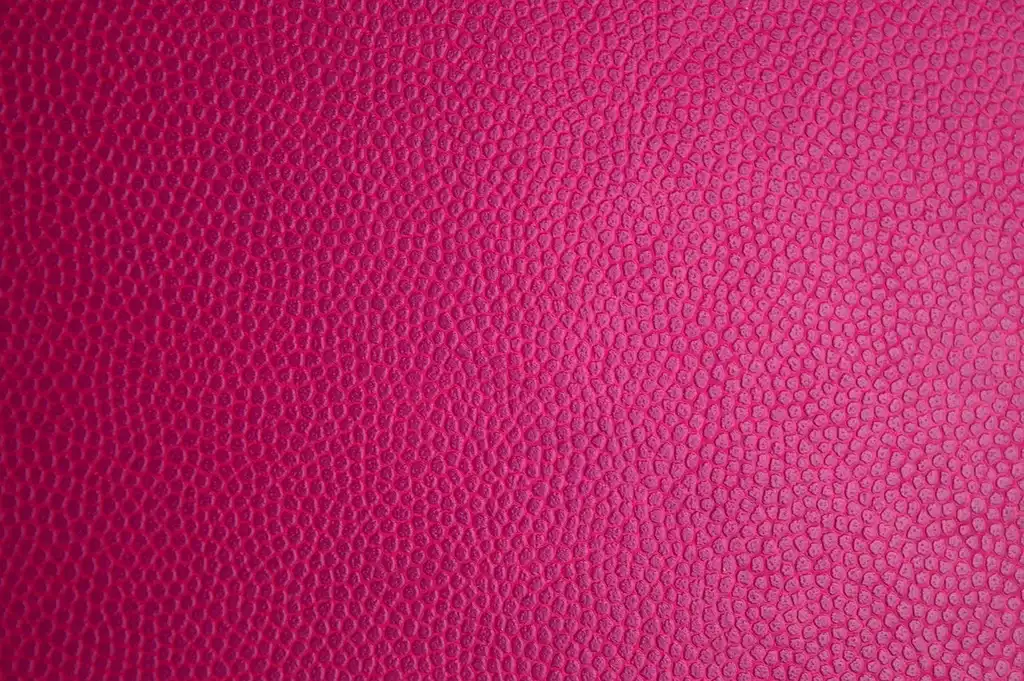
Identify the seat material before you pick a cleaner because removal risk changes more with the surface than with the stain color. Cloth handles more agitation but absorbs deeply. Leather needs pH-neutral care. Vinyl usually cleans at the surface. Alcantara and suede-like trim need the least moisture and the lightest touch.
Cloth upholstery
Cloth is commonly used for car seats, and it is also relatively absorbent. That makes it easy to stain and usually responsive to water-based cleaners, but prone to over-wetting, detergent residue, and wick-back from the foam under the fabric.
Vacuum first because it keeps grit from being rubbed deeper into the fibers. Fabric cleaners are generally safest when they are labeled for automotive upholstery and used as directed. A soft brush is usually appropriate, but use it to lift residue, not to force liquid into the cushion.
Leather upholstery
Leather should be cleaned with a pH-neutral or leather-specific product. Harsh household cleaners can discolor the finish, dry the hide, or leave it stiff after drying.
Keep moisture low, wipe gently, and dry thoroughly. Perforated leather needs even more restraint because liquid can run through the holes into padding, seat heaters, sensors in some vehicles, or wiring.
Vinyl upholstery
Vinyl is synthetic and usually easier to clean than cloth because many stains stay on the surface. It can still dry out with harsh chemicals, and repeated aggressive cleaning can lead to dulling or cracking.
Use an interior-safe cleaner diluted as directed, wipe with a damp microfiber, then buff dry. If the panel feels dry or looks chalky afterward, follow with a vinyl-safe protectant or conditioner. Do not treat vinyl like bare plastic with strong household degreasers.
Alcantara, perforated leather, and mixed-material seats
Alcantara and suede-like microfiber need minimal moisture, light agitation, and a material-specific cleaner. Hard scrubbing can mat the nap and create a permanent dark patch that still looks like a stain after the contamination is gone.
Mixed-material seats need split treatment. Clean each panel with the method suited to that panel, not one product across the whole seat. On a seat with leather bolsters and Alcantara inserts, keep the cleaner on the towel or brush rather than spraying broadly across both surfaces.
Say your seat has perforated leather centers and cloth side bolsters. Clean the cloth with a controlled fabric cleaner on a towel, then switch to a separate leather towel for the perforated center. Broad spraying is what turns a surface spot into a seat-foam problem.
What kind of stain is it?
Classify the stain by chemistry before choosing a cleaner. Tannin stains like coffee need a different first move than grease, blood, or ink. If the stain is unknown, treat it as a mixed-risk spot: vacuum first, test a hidden edge, then start with cool water or the mildest cleaner approved for that material before moving to stronger chemistry.
Tannin stains
Coffee, tea, juice, and many sodas leave tannin-based dye stains. Press a clean dry microfiber onto the spill and swap to a fresh section as it picks up liquid, then use cool water with a little soap or an upholstery-safe cleaner. Rubbing usually spreads the color and roughens fabric fibers without lifting much of the stain.
Oil-based stains
Grease, sunscreen, hand lotion, makeup balm, and food oils need a degreasing approach. Water alone smears them deeper, which is why grease and oil stains are typically treated with dish soap or a dedicated degreaser rather than plain water.
Protein and organic stains
Blood, milk, pet urine, and vomit need different handling because heat can lock them in and odor can remain in the foam below the seat cover. Blood should start with cold water only because hot water coagulates protein. Pet accidents and dairy residue respond best to enzyme cleaners because the residue below the surface is often the odor source.
Dye and pigment stains
Ink, marker, some makeup, and denim transfer behave more like pigments than food spills. If you try isopropyl alcohol, use it only for careful dabbing after testing a hidden spot first. Scrubbing can spread the pigment, strip color from the seat, or fuzz delicate microfiber surfaces, and alcohol can also disturb some dyed or coated finishes.
Suppose a blue pen mark sits on a light gray leather bolster after a hot afternoon. Interior temperatures can routinely exceed 140°F (60°C) in direct sunlight, which can make dye transfer harder to remove. That is a low-moisture, dab-only case, not a steam-cleaning case.
Stain triage table
| Stain type | Seat materials | First response | Safe cleaner type | What to avoid | Escalation trigger |
|---|---|---|---|---|---|
| Coffee | Cloth, vinyl, sealed leather | Blot fresh spill, then cool water on towel | Soap-and-water mix or upholstery cleaner | Rubbing, flooding seams, hot water | Brown ring remains after drying or stain returns from foam |
| Tea | Cloth, vinyl, sealed leather | Blot and lift surface residue | Water-based upholstery cleaner | Over-wetting cloth, alkaline household cleaners on leather | Color cast remains after one controlled cycle |
| Soda or juice | Cloth, vinyl, mixed-material seats | Blot sugar residue before it dries sticky | Upholstery cleaner for cloth, mild wipe for vinyl | Leaving sticky residue, spraying across mixed panels | Crunchy fabric, odor, or recurring tackiness |
| Grease or fries oil | Cloth, vinyl | Blot oil, do not add plain water first | Dish soap or dedicated degreaser | Water alone, heavy brushing into fabric | Dark halo spreads or oily patch grows after drying |
| Sunscreen or lotion | Leather, vinyl, cloth | Lift residue with dry towel first | Leather cleaner for leather, degreasing spot cleaner for cloth | Magic erasers, strong degreasers on finished leather | Shiny stripped patch, dye transfer, or greasy shadow remains |
| Ink or marker | Leather, vinyl, cloth | Dab, do not scrub | Isopropyl alcohol on towel or swab | Wide-area rubbing, steam, soaking | Color transfers to towel from seat finish, or line spreads |
| Blood | Cloth, vinyl, leather | Cold water only at first, blot gently | Cold water, then upholstery-safe protein treatment if needed | Hot water, steam, heated drying | Darkened set patch after heat exposure or bio cleanup concerns |
| Pet urine | Cloth mostly; can affect seams on other materials | Blot immediately and press dry towels into cushion | Enzyme cleaner | Masking odor with fragrance, oversaturating electronics zones | Odor returns after drying or moisture reached foam padding |
| Milk or dairy | Cloth, vinyl, mixed-material seats | Remove surface residue fast and keep it cool | Enzyme cleaner | Heat, steam, leaving residue in seams | Sour odor remains or spill reached seat foam |
| Unknown stain | All materials | Vacuum, blot, test hidden spot first | Mildest material-safe cleaner only | Jumping to degreasers, alcohol, or steam | Texture change, color transfer, ringing, or no progress after one repeat |
Budgeting for the right stain kit
Buying the wrong supply bundle often leads to visible residue and wasted effort. The core cost driver is whether you need scrubbing pads and extractor fluid or just a spot cleaner. A starter bundle typically runs between $15 and $45, while simple refill packs cost $8 to $20. Choosing the wrong tier for your specific fabric code leaves you without the necessary tools for that material. To avoid overpaying or underbuying, check the detailed breakdown of starter vs. refill pricing in our guide to DIY upholstery kit costs before making your purchase.
How do you remove stains from car seats step by step?
Use a least-risk-first sequence: remove dry soil, lift fresh contamination, match the cleaner to both stain chemistry and seat material, then make one controlled cleaning pass. Stop and reassess after each cycle. That sequence cuts the chance of oversaturation, residue rings, finish damage, and the common mistake of escalating before the mild method has been fully removed and dried.
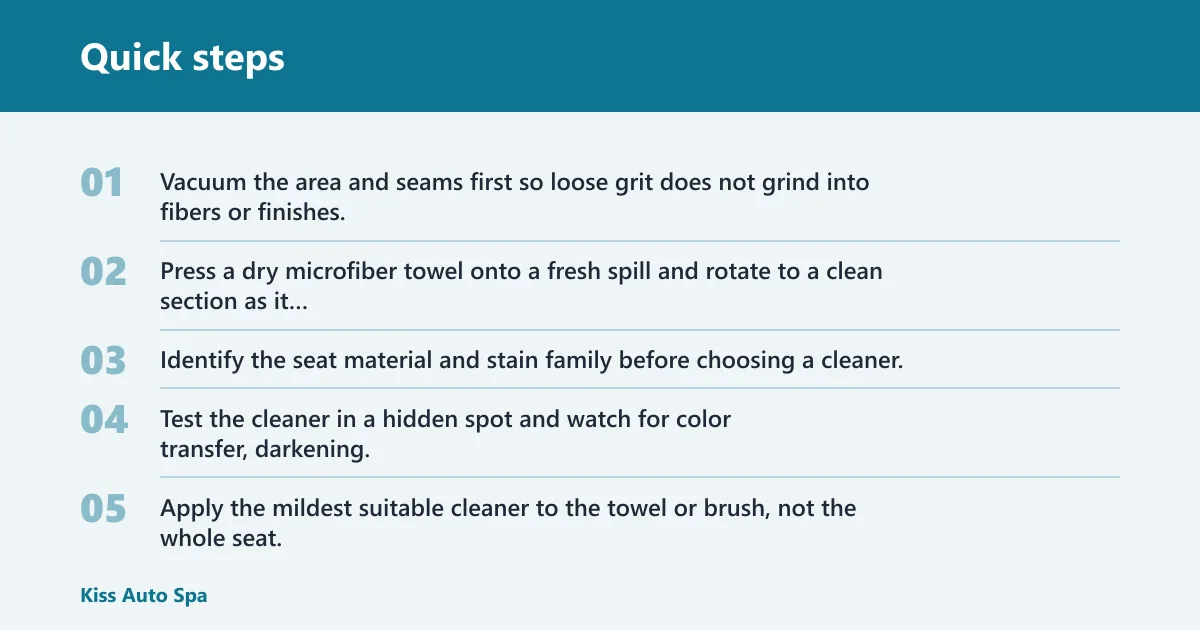
- Vacuum the area and seams first so loose grit does not grind into fibers or finishes.
- Press a dry microfiber towel onto a fresh spill and rotate to a clean section as it loads up, before adding any liquid.
- Identify the seat material and stain family before choosing a cleaner.
- Test the cleaner in a hidden spot and watch for color transfer, darkening, or texture change.
- Apply the mildest suitable cleaner to the towel or brush, not the whole seat, and control moisture tightly.
- Agitate only as much as the material allows: soft brush for cloth, light wipe for leather, minimal friction for Alcantara.
- Lift residue with a clean towel, changing towel sections as soil transfers.
- Wipe away cleaner residue if the label requires it, because leftover detergent can attract dirt and create rings.
- Repeat one controlled cycle if needed; add one extra spray to the towel, then recheck before doing more.
- Dry the seat fully with airflow so odor, mildew, and wick-back are less likely.
How to choose the first cleaner
On cloth, start with cool water or a water-based upholstery cleaner. On leather, start with leather cleaner only. On vinyl, use a mild interior-safe cleaner. On Alcantara, use a material-specific cleaner with the lightest possible moisture.
For grease, shift to dish soap or a dedicated degreaser early. For blood, start with cold water only. For urine or milk, move to an enzyme cleaner sooner because odor control depends on breaking down residue, not masking it.
If that didn’t work
- Repeat the same method once after the area is nearly dry. Some stains release more evenly on the second pass.
- Move from spray-on-towel cleaning to foam cleaning if the stain is on cloth and you need more dwell without more liquid.
- Use a portable extractor on cloth only if the stain or odor has moved below the surface.
- Stop DIY work and book a detailer if the stain is heat-set, large-area, in perforated leather, or near airbags and seat electronics.
Fresh, dried, heat-set, and previously cleaned stains
Fresh spills usually respond best because the contamination is still near the surface. Dried stains often need a little rehydration first. Heat-set stains are different: sun, heated seats, or hot water can bind proteins and dyes more stubbornly, so pushing harder often causes damage before removal.
Previously cleaned stains need extra caution. If a stain has already been scrubbed with soap, household spray, or too much water, the visible mark may now be part stain and part residue ring. Treat the residue before repeating the original stain remover.
How steam fits into cloth-seat stain removal
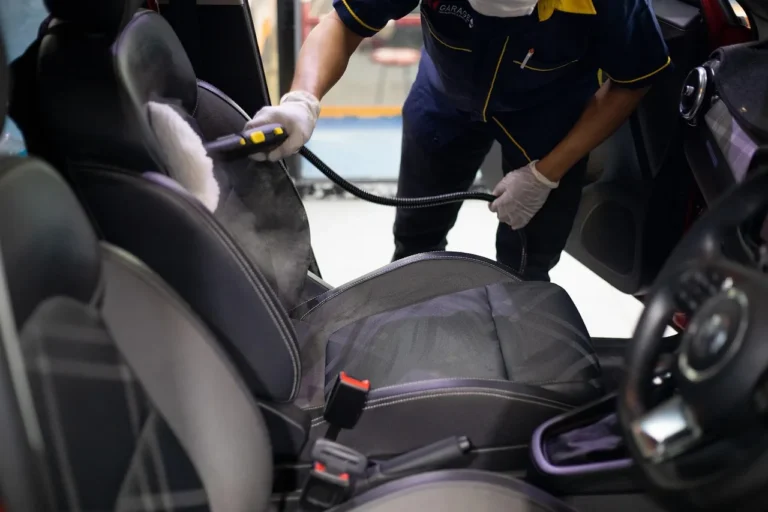
Steam can be a safe option for stained cloth seats when the fabric is durable, the stain is surface-level, and you use brief, low-to-medium heat instead of lingering on one spot. The key is knowing when steam helps loosen grime and when it can make things worse by setting a stain, softening adhesive, or pushing moisture into the cushion. The supporting guide on steam cleaning cloth seats explains the warning signs, the fabrics to be cautious with, and the situations where you should stop and switch methods.
That matters because the wrong approach can leave a larger stain, longer dry time, or hidden dampness that leads to odor or mold. Use it as a quick decision guide before you treat a seat.
How to protect car upholstery from stains
The supporting guide breaks down stain prevention by seat material—cloth, leather, vinyl, and suede-style trim—so you can choose the right approach instead of applying the same product everywhere. It walks through what protection works best for each surface, how to apply it correctly, and the quick-spill steps that stop damage before it sets.
Skipping the material match is the fastest way to cause rings, slick residue, or deeper dirt buildup, so understanding which product fits your seats matters more than picking a single “all-purpose” solution. The upholstery stain prevention article covers practical do’s and don’ts for every common seat type, including common mistakes to avoid and whether seat covers are worth the trade-off.
When should you use an extractor or steam cleaner?
Use an extractor on cloth when soil or odor has moved below the surface and towel cleaning cannot reach the foam. Use steam far more selectively. Heat and moisture can set some protein stains, disturb adhesives, mat Alcantara, and push liquid into perforations, seams, electronics, and side-airbag areas.
When extraction makes sense
A portable upholstery extractor is useful on cloth seats after spilled coffee, soda, pet urine, or tracked-in grime where the contamination has soaked below the visible fabric. Extract only enough solution to rinse and recover residue. Oversaturation is the main failure mode.
If the seat feels cool and damp deep into the cushion hours later, too much liquid went in. That can pull stains back to the surface as the foam dries and can leave odor behind.
When steam is unsafe or unhelpful
Steam is a poor choice for blood, milk, pet urine, or other protein-heavy stains because heat can lock residue in place. It is also risky on leather, perforated leather, Alcantara, glued trim, stitched seams, and any area with seat heaters or sensors underneath.
Use low-moisture methods around side-airbag zones, seat controls, and wiring exits. Steam also does little for oily contamination unless the oil is first broken with an appropriate cleaner.
Foam, spray, extractor, or steam
Choose by depth and material. Foam is useful for cloth when you want dwell time with less soaking. Spray-on-towel cleaning is the safer first move on leather, vinyl, mixed materials, and mystery stains. Extraction is for cloth when contamination reached the padding. Steam is a niche tool, not a default step.
Common mistakes
Over-wetting cloth
Too much liquid is what turns a visible spot into a larger, returning stain. Cloth can be brushed safely, but once the foam underneath gets wet, the stain can wick back to the surface as it dries. Work from towel and brush, not from puddles.
Using heat on protein stains
Blood needs cold water first, and dairy or pet residue should stay away from heat until the contamination is broken down. Heated seats, sunlight, hot water, and steam can all make cleanup harder.
Rubbing ink, dye stains, or Alcantara
Scrubbing tends to spread pigment. On Alcantara, it can also flatten the nap and leave a dark, worn-looking patch. Dab and lift instead. If the towel starts picking up seat color rather than stain color, stop.
Leaving residue, rings, or wick-back
If the cleaner leaves a lighter ring or crunchy patch, the problem may be detergent residue rather than the original stain. Re-dampen the area lightly with plain water on a towel, feather past the edge of the ring, blot dry, and use airflow. On cloth, one careful extraction pass may be needed to remove leftover cleaner.
Picture a 3-inch coffee spill on a cloth seat that looks gone at night and reappears by morning as a tan halo. That is classic wick-back. The fix is not more scrubbing, it is controlled re-cleaning, better residue removal, and complete drying.
Prevention
Keep a dry microfiber towel and a small fabric-safe cleaner in the car. A quick blot at the parking lot matters more than a stronger cleaner used the next day.
When should you stop and call a detailer?
Stop DIY cleaning when the stain is set in, heat-set, large, odor-heavy, or located on delicate or electronic-sensitive seating surfaces. Professional extraction and low-moisture detailing become the better value once repeated home attempts risk cracking leather, matting Alcantara, or soaking foam and wiring.
Cases that usually justify pro help
Call a detailer for pet urine that has reached the foam, sour milk odor, bio stains, widespread dye transfer, repeated wick-back, or any stain that has already survived multiple DIY attempts. A pro is also the safer call for perforated leather, mixed-material seats with premium inserts, and stains near side airbags or heater elements.
DIY becomes uneconomical faster than most owners expect
If each new attempt adds more cleaner, more moisture, or a stronger chemical without a cleaner-looking towel, the seat is not moving in the right direction. That is the point where extraction, specialized chemistry, or controlled drying equipment usually costs less than more trial and error.
Frequently asked questions
How do you clean stained car seat upholstery?
Vacuum first, blot fresh spills, match the cleaner to the seat material and stain type, then dry the seat fully with airflow.
How do you remove stains on car seats?
Start with the mildest suitable cleaner, make one controlled pass, and stop if the stain spreads or the towel lifts seat color.
How do you remove stains from car upholstery?
On cloth, use a fabric-safe cleaner without soaking the cushion. On leather or vinyl, keep moisture low and wipe gently.
What is the safest way to clean cloth car seat stains?
The safest cloth method is vacuum, blot, test, then use a fabric cleaner labeled for upholstery with controlled moisture and light brushing.
When should you use a steam cleaner on car seats?
Use steam sparingly and usually not as a first step. Avoid it on leather, perforated leather, Alcantara, blood, milk, pet urine, glued trim, seams, and electronics areas.
How do you clean different stains without damaging the seat material?
Match the chemistry to the stain and the method to the seat material, then keep moisture and friction as low as the surface requires.